What is the difference between Alocasia macrorrhizos and Alocasia cucullata?
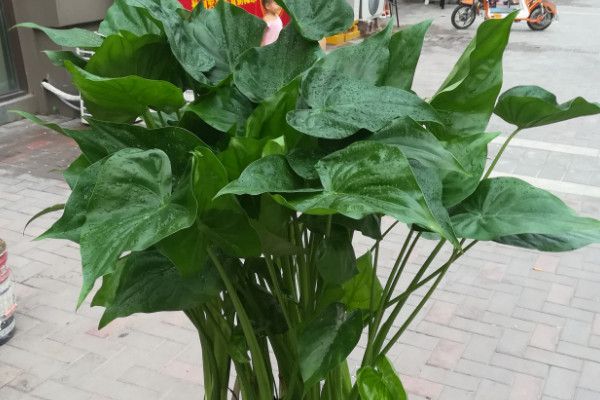
The difference between Alocasia macrorrhizos and Alocasia cucullata lies mainly in leaf shape, plant form, growing habits and distribution areas. Alocasia macrorrhizos has ovate-hastate leaves with no splitting, a broad plant form, and can adapt to cool and shady environments, while Alocasia cucullata has palmate leaves, an upright plant form, and slightly higher requirements for its environment.
How to tell Alocasia macrorrhizos and Alocasia cucullata apart
1. Leaf shape
Alocasia macrorrhizos and Alocasia cucullata differ greatly in form. Alocasia macrorrhizos has pointed ovate-hastate leaves that are relatively broad and thick, and the plant itself is larger, while Alocasia cucullata has palmate, split leaves that are smaller in size and close to an oval shape, and like Alocasia macrorrhizos it stays evergreen all year round.
2. Plant form
Alocasia macrorrhizos and Alocasia cucullata also differ somewhat in plant appearance. Because Alocasia macrorrhizos has a relatively thick main stem and broad leaves, it usually has only 4-5 leaves even when it grows to a height of 3-5 m, but Alocasia cucullata has smaller leaves and slender branches, and often has dozens of leaves on its upright plant.
3. Growing habits
The optimal growing temperature for Alocasia cucullata is between 20-30°C, and it can tolerate temperatures only as low as 10-15°C, while Alocasia macrorrhizos can tolerate temperatures around 8°C. Alocasia cucullata also needs very fertile soil and a comfortable environment, while Alocasia macrorrhizos only needs a relatively cool, shady and ventilated environment.
4. Distribution areas
Alocasia cucullata mainly comes from Guangzhou, is fairly widely distributed in Bangladesh and Thailand, and is favored by Southeast Asian countries, while Alocasia cucullata is widely distributed within China, being found in Yunnan, Sichuan, Guizhou, Hunan and other places, with some planting also in the Guangxi region, so Alocasia macrorrhizos has stronger adaptability than Alocasia cucullata.