How to grow corn poppies? Master these care points
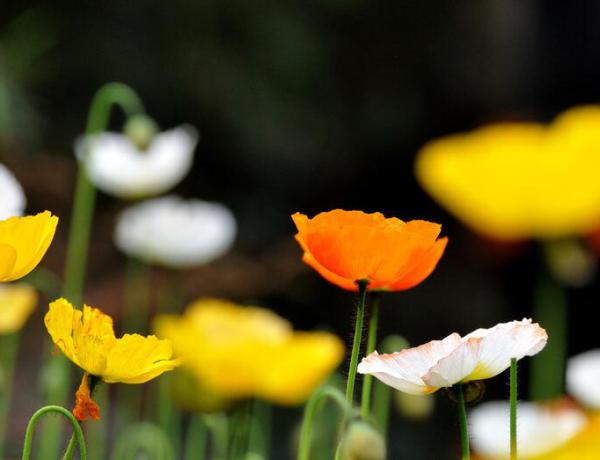
Flower lovers who enjoy watching anime must be very familiar with a beautiful plant like this, and that is the corn poppy. In Japanese anime, there are often scenes of large patches of beautiful corn poppies blooming on hillsides, with the petals swaying in the wind, creating a very beautiful mood that truly makes one long for it. But did you know? Such a beautiful corn poppy is actually a flower that hides danger as well.
As for the corn poppy, generally speaking, we see it more often in parks, and in some areas it is also often planted in green belts, because its colors are very bright and gorgeous, and when the whole plant is paired with the surrounding greenery, it looks very eye-catching.
And the most important point is that corn poppies are very easy to propagate. The next year, new plants will grow on their own in the place where corn poppies were planted before, without any need for people to worry about it. So many places choose to use corn poppies as landscaping plants to beautify the city.
As for the dangerous aspect of corn poppies, it is precisely because a few days ago I heard a news story about corn poppies in a green belt. A child in Nanjing was playing near a green belt, and suddenly an allergic reaction appeared, with very severe symptoms. He was then sent to the hospital, and the doctor diagnosed it as caused by accidentally eating corn poppy branches and leaves. Fortunately, he was ultimately out of danger.
Because the whole corn poppy plant is toxic, including its flowers, leaves, roots, and fruits, and the toxicity is quite strong. If someone accidentally eats it, poisoning symptoms will appear.
If someone has more sensitive skin, contact with the branches and leaves of the corn poppy can also cause severe allergic reactions. So although this flower looks delicate and beautiful, the toxicity it contains is indeed very strong. When we see corn poppies, it is enough to admire them from a distance. Do not get too close or even touch them just because of their beauty.
However, if we know about this toxicity of corn poppies, we will be more careful when contacting them. If you can pay a little attention yourself, then it is actually fine to keep a pot at home.
But if there are elderly people, children, or pregnant women at home, then try not to grow it at home, so as to avoid some uncontrollable risks. Although corn poppies are beautiful and dangerous, they are actually very simple to care for. Today I will summarize a few small care points for everyone.
1. Propagation: Scatter our corn poppy seeds directly on the soil. For the next step, we do not need to cover the seeds with soil, because doing so will reduce the germination rate of corn poppies. I suggest directly finding some well-rotted pine needles or crushed dead leaves and covering them over the seeds.
After a few days, you will see some corn poppy seedlings have already emerged from the gaps in the leaves. At this time, we can remove some excess leaves that are obstructing the growth of the seedlings. When the seedlings grow two pairs of leaves, we can dig them out and transplant them into a large flower pot.
2. Location: Corn poppies originally grow as a plant on wild hillsides, so if we can imitate the hillside environment, they will grow very well. Usually, try to place it in a place with plenty of sunlight, and be sure to ensure smooth ventilation, so that the petals of the corn poppy will bloom elegantly and thinly.
3. Watering: When caring for corn poppies, try to water thoroughly only after the soil has dried out, to imitate the frequency of natural rainfall. When watering normally, you can add a little rotted rice-washing water, or our own homemade enzyme fertilizer, so that the flower color of the corn poppy will be even more gorgeous.