What causes Dendrobium to drop its leaves?
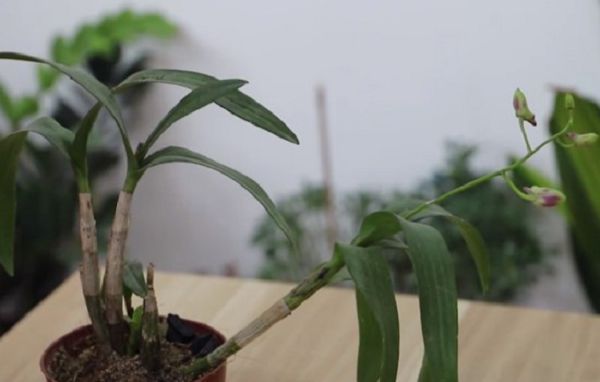
Dendrobium is a perennial herbaceous plant of the orchid family, so many growers also call it Dendrobium orchid. No matter what it is called, its practical value has always been tremendous: it not only has strong medicinal value, but also offers considerable health-promoting benefits. So this is a plant that can both be used as medicine to treat illness and be taken orally for health maintenance. Ever since people have come to know it better and better, its practical value has been brought into full play.
Although its practical value seems very high and its vitality is fairly tenacious, its requirements for the growing environment are extremely strict, especially in pot cultivation, where we must not be careless. Even so, in actual growing practice, some growers still fail to grow it well, and it is especially prone to dropping leaves. What is going on here?
Potted Dendrobium can likewise be used as medicine or for health maintenance, and it also has good ornamental value; especially when it blooms, potted Dendrobium is truly exquisite. But when it drops leaves, apart from some varieties doing so during their winter dormancy, abnormal leaf drop at other times necessarily means the plant has developed a growth problem. The main reasons are as follows:
1. Leaf drop from drought
Dendrobium prefers a moist growing environment. Although it is fairly drought-tolerant, it prefers moisture even more, and this includes both the moisture in the pot and the humidity in the air. So, in order to avoid root rot caused by watering, and at the same time to create a humid air environment for it, watering should normally combine watering with misting.
If the environment is too dry and the plant suffers drought, then over time it will keep dropping leaves. Therefore, apart from controlling water in autumn and winter when temperatures are low, there is no need to control water frequently in other seasons, otherwise it will suffer drought. When that happens, it will not only drop a large number of leaves, but also produce quite a few yellow leaves.
2. Leaf drop from root rot
Dendrobium's root system is mostly fleshy roots, which are drought-tolerant and afraid of waterlogging, so when we water too much and cause water to accumulate in the pot, it tends to rot its roots easily. And when the plant develops root rot, it will likewise drop a large number of leaves and develop yellow leaves. In severe cases, even its stems will turn yellow, dry up and so on.
When Dendrobium develops root rot, it should be taken out of the pot and have its roots trimmed at the first opportunity, then disinfected, dried and replanted. At the same time, the withered and yellow branches and leaves produced by the plant need to be cut off to avoid wasting nutrients in vain, and this can also lighten the burden on the roots, which is very important for the plant to re-establish itself after repotting.
3. Normal leaf drop
Dendrobium often drops leaves. Besides the possible factor of improper care, it may also be a manifestation of the plant's normal metabolism. Because Dendrobium is not cold-tolerant, in autumn and winter when temperatures are low, especially when the growing environment stays below 15°C for a long time in winter, the plant will go dormant and thus drop a large number of leaves.
Not only that, the leaves on the middle and lower parts of some old stems will also gradually turn yellow and fall off. This is usually a normal phenomenon, determined by its growth habits. Generally, if we keep the growing environment above 15°C, the yellowing and leaf drop of Dendrobium can be alleviated. And after temperatures warm up again next spring, it will resume normal growth and put out new branches and leaves once more.