Can a jade plant be placed outdoors for care in summer?
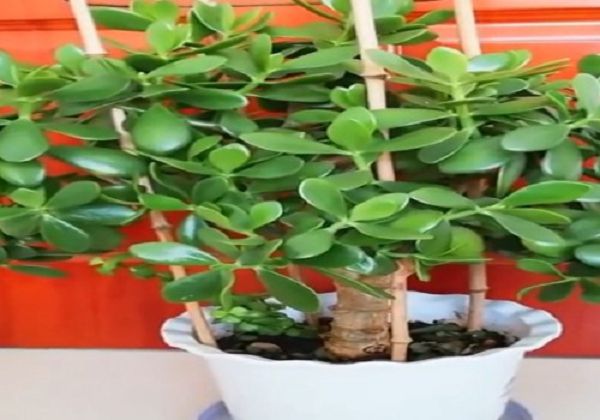
The jade plant is a succulent with an underdeveloped root system, so it often grows somewhat more slowly than many flowering plants. But if the light is fairly abundant, photosynthesis is stronger, more nutrients are synthesized, and the plant grows more vigorously.
Generally, the jade plant is better suited to being placed outdoors for care in spring and autumn, when the light is more plentiful and the light intensity is not too strong, so it is less likely to cause scorching. After all, the jade plant likes sunlight, but at the same time it fears direct strong light or scorching sun exposure.
But summer often brings high temperatures, hot weather and strong light intensity, and in a high-temperature summer environment the jade plant not only easily enters a dormant or semi-dormant state, but also easily gets sunburned because it does not tolerate direct strong light or scorching exposure. So in summer, it is not suitable to keep it outdoors in the sun.
The greatest harm to the jade plant in summer usually comes from two aspects: one is scorching sun exposure, and the other is the onslaught of violent wind and rain. There is no doubt that the jade plant will be sunburned in the scorching sun, and in heavy rain it is prone to water accumulating in the pot, which leads to root rot. After all, the jade plant has an underdeveloped root system and is tolerant of drought but not of waterlogging.
Therefore, even if you want to place a potted jade plant outdoors for care in summer, you must take measures to shade it and shelter it from rain. This can both prevent scorching that causes burns and prevent water accumulating in the pot that causes root rot. But to be safe, it is generally recommended to keep it indoors in a bright, well-ventilated place in summer.