Pomegranate Sprouting Period Management Methods and Technical Points
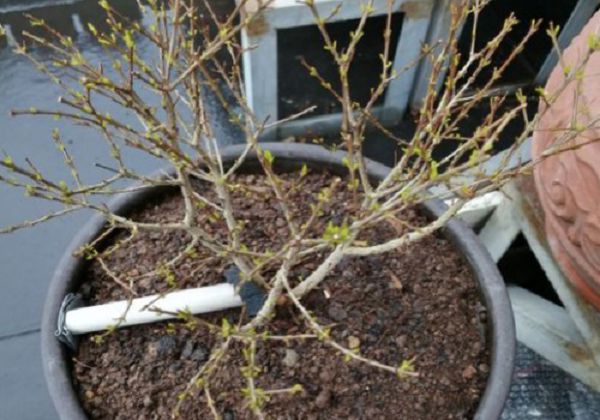
Pomegranate trees generally sprout in March-April each year, and the sprouting period coincides with their growing season. For pomegranate trees planted in the ground, management is often relatively simple, but for potted pomegranates, since the space in the pot cannot compare with a ground-planted environment, more attention usually needs to be paid to the corresponding care and management work during the sprouting period.
The care and management work for potted pomegranate trees during the sprouting period is very important. If management is not done properly, it will affect their pushing out branches and leaves, thereby also having a relatively large impact on tree vigor, and may even affect the subsequent flowering and fruiting. The care of potted pomegranates during the sprouting period is mainly about strengthening management in terms of light, temperature, water and fertilizer.
I. Light
Since pomegranate is a sun-loving tree species, it relatively likes light. Pomegranates usually sprout new buds around Qingming Festival, and the light intensity is not very strong at that time, so they should be given more sun exposure, thereby increasing photosynthesis to form nutrients, promoting the sprouting of new buds and the smooth progress of metabolism.
II. Temperature
Pomegranate trees usually sprout in spring, and temperature protection during the sprouting period is very important. Generally, the ambient temperature needs to be kept stable above 15°C, since pomegranate has the characteristic of preferring warmth. When the temperature is suitable, it can accelerate their sprouting; conversely, if the temperature is too low, it will inevitably inhibit their sprouting.
III. Watering
When pomegranate trees are in the sprouting period, we should promptly strengthen water supply. If there is a lack of water at this time, the tender buds are prone to withering due to dehydration, or even dying. However, pomegranate is drought-tolerant but not waterlogging-tolerant, and excessive watering can easily cause root rot. When watering, the frequency should be appropriately increased, and watering should be done promptly once the potting soil becomes dry, following the principle of watering when dry and stopping when moist.
IV. Fertilizing
When pomegranate is in the growing season, especially in the early stage before sprouting, attention should be paid to topdressing, because the plant needs more nutrients to promote sprouting. In order to promote plant sprouting, nitrogen fertilizer is usually the main topdressing, but in a potted environment, it is recommended to appropriately combine in a little phosphorus and potassium fertilizer. However, as flowering approaches, phosphorus and potassium fertilizer should be the main focus, with nitrogen fertilizer used less or stopped.
V. Pruning
During the sprouting period of pomegranate, it is also the period of the plant's new-and-old replacement. In order to ensure that new buds can sprout smoothly and push out branches and leaves, we need to cut off dead or excessively slow-growing branches and leaves, avoiding their pointless consumption of nutrients and affecting the sprouting of new buds. But generally we have already pruned once before sprouting, so at this time there is relatively little to prune, and excessive pruning must not be done. At the same time, the pinching treatment of new shoots should be done well, avoiding their excessive growth and damaging the plant shape.