How do you care for baby's breath (Gypsophila) to get a bursting pot? Master these few care points
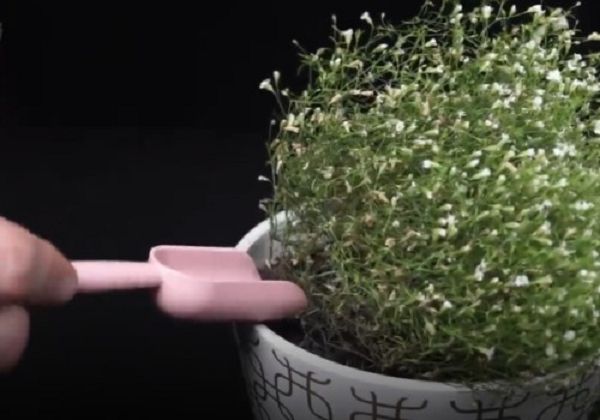
Baby's breath is an excellent cut flower material, and for the home environment it is also a great decorative plant; generally we grow it as a potted plant for ornamental purposes. After all, baby's breath stays evergreen through all four seasons, with delicate flowers and leaves and good ornamental value. Moreover, when grown in pots, baby's breath is fairly easy to care for; as long as we carry out the relevant management measures well, it is easy to make it burst into a full pot.
In fact, to make a potted baby's breath burst into a full pot, we only need to do well in two major aspects. One aspect is providing the plant with a good growing environment, and the other is doing a good job of daily care. For experienced veteran growers, this seems quite simple to do, but for beginners who are not yet familiar with this flowering plant, baby's breath, putting it into practice is often rather difficult. To help beginner growers care well for potted baby's breath and successfully make it burst into a full pot, the editor is here today to offer some tips.
1. The growing environment must be suitable
Baby's breath prefers fertile, loose, airy and well-draining, slightly alkaline calcareous or sandy soil, and also likes a warm, humid, well-lit and well-ventilated space. As long as we can provide a care environment in line with these habits, we can satisfy the plant's growth needs well.
Normally, the pot should be placed in a well-lit spot so it can get plenty of sun, which can prevent leggy growth, as long as it is not exposed to scorching sun; the temperature should be kept between 15°C and 25°C, because baby's breath tolerates neither heat nor cold, and when the temperature drops below 10°C it will go dormant.
Water by the principle of "water when dry, stop when wet, water thoroughly when completely dry", but do not let water accumulate; at the same time, mist appropriately to raise air humidity; during the growing season, apply a diluted liquid fertilizer once every 10 days, and near the flowering period apply 2-3 rounds of diluted potassium dihydrogen phosphate solution to meet the nutrients needed for growth and flowering. In this way, we have created a fairly suitable environment for its growth.
2. Regular pinching and pruning
Pinching or topping is very important for promoting the sprouting, growth and even flowering of baby's breath, and it should be started from the seedling stage. Generally, when the seedling reaches a height of 5 cm, the first pinching should be done to control the plant shape and promote branching. And after the side branches grow out, they also need to be pinched or topped in time; by repeatedly pinching, not only can the plant grow more vigorously, but the plant shape can also be made more beautiful.
But potted baby's breath is best shaped into a spherical form; when it blooms, what is presented will be a big ball of flowers, very beautiful. To achieve this effect, we also need to use pruning methods combined with pinching for management. Pinching generally needs to run through the entire growing season of baby's breath, while pruning is mainly a means used for shaping needs and to stimulate plant growth after flowering. Combining the two often achieves twice the result with half the effort.
3. Management in other aspects
As for other aspects, what we need to do well is regularly changing the pot and soil; after all, baby's breath has a very developed root system, and most of it is fine fibrous roots. Regularly changing the pot and soil can not only solve the problem of insufficient space in the pot, but also solve the problem of the potting soil becoming compacted, and can also obtain more sufficient nutrients from the new pot and soil, thus providing a more suitable in-pot environment for its growth, keeping it always full of growth vitality and laying a good foundation for a bursting pot of flowers.
To speed up a potted baby's breath bursting into a full pot, in the usual care and management process we can also use some expired beer, overnight tea water, or fermented rice-washing water for the plant; as long as it is diluted in a suitable ratio and fully shaken evenly and then poured on the baby's breath as liquid fertilizer, this can make its leaves greener and its flowers more beautiful, raise the ornamental value of the potted plant, and a bursting pot will be just around the corner.