There are small red spots on the leaves of the succulent Tiya. What is going on?
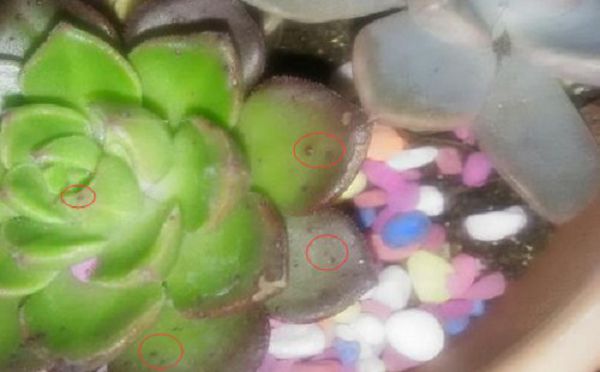
The succulent Tiya has green leaves, and the leaf edges are mostly red. Moreover, under sufficient light, the red color gradually spreads toward the center of the leaf, as vivid as fireworks, making it very beautiful as a potted ornamental plant. However, sometimes during care and management, we occasionally notice some red spots appearing on the leaves. What is going on?
In potted succulent Tiya under normal care and management, the leaves are mostly green. If a small number of red spots are scattered sparsely on the leaves, this is also a normal phenomenon. People usually call them blood spots, and the appearance of blood spots on succulents is often a normal manifestation during their growth process. For succulents like Tiya, the appearance of blood spots is mainly caused by improper lighting.
Although these small red spots will gradually disappear during care and management, people mostly hope they will persist, because enthusiasts who like growing succulents usually pursue color-changing effects in plants, and some even specifically choose varieties that can develop blood spots for potting. Even for a succulent like Tiya, it usually needs both red and green in the leaves to have greater ornamental value.
To make Tiya develop more blood spots, we mainly achieve this through two aspects: one is increasing light; the other is adjusting temperature. But enthusiasts who are unfamiliar with this, upon seeing scattered blood spots growing on Tiya leaves, often think the plant is sick. In fact, this is caused by light and temperature differences, and it is a natural growth phenomenon, so there is no need to worry.
To make the green and red of the succulent Tiya stand out more and become more ornamental, in daily care and management, we mainly improve or adjust it from the following two aspects:
1. Improve lighting
To make Tiya grow more numerous, larger, and more vividly colored red blood spots and thereby overall improve its ornamental value, we can appropriately improve the lighting conditions. If it is not being cared for in the harsh sun of summer, this can usually be achieved by increasing the duration of light exposure and the area receiving light.
By providing more ample light, especially in autumn and winter, the green leaves of Tiya will begin to turn vivid red from the edges until the color spreads across the entire leaf. It can be seen that light plays a very important role in the growth of the succulent Tiya, especially with a crucial effect on leaf color.
2. Adjust temperature
In addition to improving lighting, we can also appropriately adjust the temperature to increase the more ornamental red color on the leaves. When the temperature in Tiya's growing environment drops to 23°c, its leaf edges begin to change from green to red; and as the temperature gradually decreases, not only does the red at the leaf edges gradually spread toward the center of the leaf, but the red also becomes more vivid, until it covers the entire leaf, making the potted succulent Tiya present a fiery red expanse.
Relatively speaking, the lower the temperature, the faster Tiya's leaf color changes from green to red, and the more vivid the color becomes. Of course, this is also the effect many enthusiasts want to achieve, because vividly red plants have greater ornamental value. However, the temperature in Tiya's growing environment should not drop too low, and usually needs to be kept above 5°C. The optimal growing temperature for leaf color change is usually between 15-20°c.
From this it can be seen that to improve the ornamental value of the potted succulent Tiya, this is mainly achieved by changing its leaf color, that is, from fresh green to vivid red. To achieve the change in leaf color, this is mainly achieved by improving lighting conditions and adjusting the ambient temperature.