How Does Mock Lime (Aglaia odorata) Survive the Winter? Winter Care Methods for Foliage Plants
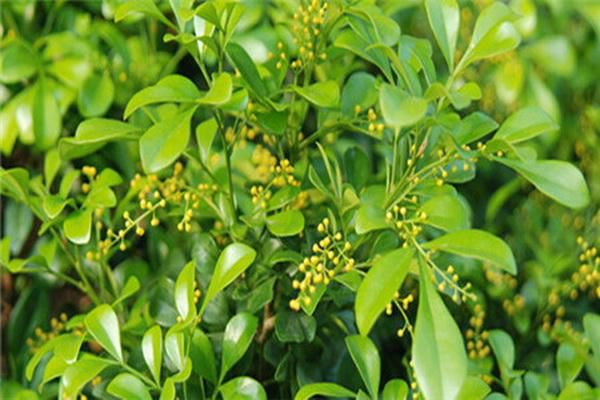
Mock Lime (Aglaia odorata) aliases: Sijimi (Four-Season Mock Lime), Suimilan (Broken Mock Lime); belongs to the Meliaceae family, Aglaia genus; an evergreen shrub or small tree, native to subtropical Yunnan, Fujian and other places, distributed in Guangxi, Sichuan, Guizhou and Yunnan.
The mock lime has dense branches and leaves, with lush green and glossy foliage. It blooms multiple times within a year, most abundantly in summer and autumn. When in bloom, it gives off a delicate fragrance resembling that of orchids. The tips of the small branches often bear star-shaped rusty-colored scales; the pinnately compound leaves are alternate; the flowers are yellow, extremely fragrant, about 2 mm in diameter. The bisexual pedicels are slightly short and thick; the calyx is 5-lobed; the corolla has 5 petals, oblong; the berry is nearly spherical, 10-12 mm long; the flowering period is between summer and autumn.
Mock lime adapts to warm and humid climate conditions, and mature plants need plenty of sunlight. In southern courtyards, mock lime is also an excellent landscape tree.
Key Winter Care Points:
Mock Lime Winter Care: Improving Cold Resistance
The mock lime itself has poor cold resistance. Can changing its environment improve its cold resistance? The answer is: yes. After autumn begins, stop fertilizing, especially with nitrogen fertilizer; of course, a moderate application of phosphorus and potassium fertilizer is fine. At the same time, control watering and keep the potting soil on the dry side, promoting more luxuriant growth of branches and leaves. This can effectively increase the plant's resistance, so that when a cold wave arrives, it will not be so easily knocked down.
Mock Lime Winter Care: Properly Increasing Temperature
When the temperature drops below 0°C, the mock lime's growth will be disrupted and its leaves will suffer frost damage. Generally, the plant should be moved indoors early, and the weather should be closely monitored so that countermeasures can be taken. Place the flowerpot in a sunny spot indoors, not in a drafty spot, to prevent cold wind from hitting the plant. Throughout the winter, the indoor temperature should not fluctuate too much, so as not to affect the plant's dormancy. Generally, it should be kept at 10-12°C; if the room temperature exceeds 15°C, the plant will sprout new buds and consume nutrients.
After winter passes, it does not mean that the mock lime's winter is over. Do not move it outdoors too early in early spring, lest after being taken outside it is attacked by cold wind and develops dry tips, which affects flowering. After moving it outdoors, if the temperature is still relatively low, you can cover the entire plant with plastic film, or cover it with cold-protection material, but not for too long, so as not to affect the plant's photosynthesis and accumulation of nutrients.
Mock Lime Winter Care: Proper Watering
In winter, the mock lime is in a dormant or semi-dormant state. The potting soil must not be too dry or too wet, and you should not wait until the potting soil is completely dry before watering, nor should you water heavily; ensure balanced moisture in the potting soil. In addition, to prevent the leaf surface from becoming covered with dust, which hinders photosynthesis and causes leaves to turn yellow and drop, you should spray water close to room temperature about once every 10 days to clean the leaves, and be careful not to spray too much water.
Mock Lime Winter Care: Do Not Move It Outdoors Too Early
As mentioned earlier in the article, the mock lime's winter is very long, and the cold waves of early spring are also winter for the mock lime. So when the spring climate is not yet stable, do not rush to move the flowerpot outdoors. Before taking it outside, you can open the windows around midday for ventilation, letting the plant adapt to the outdoor environment in advance, and then move it outdoors after a few days. If windy or cold wave weather suddenly occurs, it needs to be moved back indoors promptly.