How to grow hibiscus? Practical care tips shared
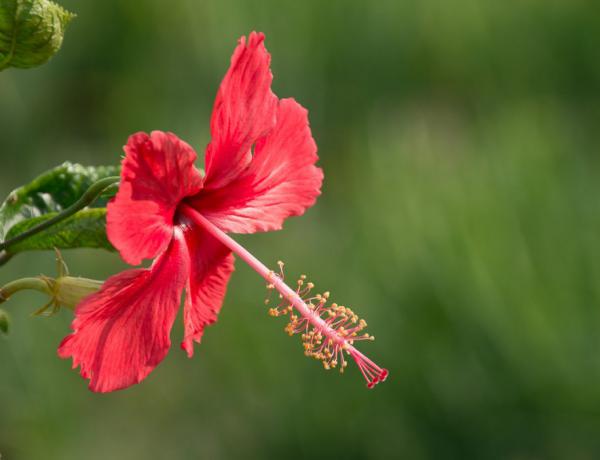
Hibiscus, also called rose mallow, belongs to the Malvaceae family, genus Hibiscus, and is a perennial evergreen shrub. Its hybrid varieties come in a wide range of flower colors, with large, brilliantly colored blooms and an extremely long flowering period; with proper care, it can bloom in all four seasons. But some people find it difficult to grow, so not many people like to keep it. Actually, the editor thinks that apart from its tendency to drop flowers, it is quite easy to grow. As long as you do the following points well, there is basically no problem.
1. Light: Different flowers have rather different light requirements. Some like more light and only grow well with plenty of sun, while others dislike sun exposure and easily run into problems once exposed. So before growing a flower, you must clearly understand its preferences, and hibiscus is a typical light-loving flower. Even the scorching sunlight of summer will not harm it; instead, it helps it grow better.
Therefore, do not think that moving it indoors in summer is good for it. In fact, that is an unnecessary move; rather, it will affect its growth and development and also hinder its blooming. So it must be placed in the brightest spot, ideally receiving enough light all day long, to maintain vigorous growth.
2. Fertilizing: The flowers hibiscus produces are very large, and its blooming period is very long-lasting, so the nutrients it needs are certainly somewhat more than those of ordinary plants. The nutrients in the soil are easily used up, so at this point you must fertilize regularly to maintain enough growth momentum. Just imagine: if it blooms for 300 days out of 365 days a year, the nutrients consumed during that time can well be imagined. Therefore, it is best to apply fertilizer once every half month, and phosphorus-potassium fertilizer is the most suitable, so that the plant can grow fast and bloom more vigorously.
3. Watering: Watering hibiscus depends on the season to decide the frequency and amount. For example, in spring and autumn, when the weather is relatively humid, watering once a day is enough. But summer weather is very hot and the air is relatively dry, so watering at least twice a day is needed to meet the plant's growth needs. In winter, the climate is relatively dry and the temperature is lower, so water evaporates very slowly; at this time, watering once a week is enough, and watering too much easily causes rot.
4. Pest prevention: Because hibiscus flowers are so beautiful, it is always attacked by insects, so pest prevention is also a very important step in its care. It is best to spray pesticide regularly to effectively protect the plant from pests.
Actually, hibiscus really is a good choice. If you have not grown one yet, the editor suggests you try keeping a pot. As long as you pay attention to the above points, you can keep it from dropping flowers and it will keep blooming in a full pot; it really is not difficult at all.