How to fertilize potted peppers? A few practical methods to teach you
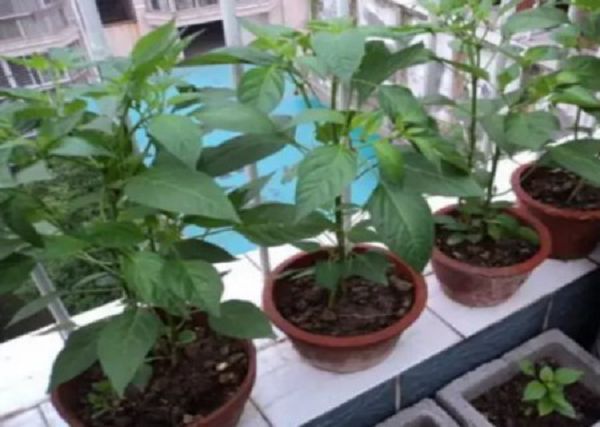
Peppers absorb nutrients at different growth stages. Nitrogen rises steadily as growth progresses; as fruit yield increases, the amount absorbed rises. Phosphorus absorption varies only slightly across stages. Potassium absorption is low in the early growth stage, then increases markedly from the start of fruit harvest and continues until the end. Calcium absorption also rises with the growing period; if calcium supply is insufficient during fruit development, blossom-end rot is likely to occur. The peak of magnesium absorption is during the full fruit-picking stage.
If you want your peppers to bear more fruit, you need not only light but frequent fertilization, but also suitable fertilizer. Besides routine topdressing, when balcony potted peppers have just been transplanted, you can add an appropriate amount of decomposed cake fertilizer or animal manure under the potting soil. Once the pepper seedlings grow, you can generally fertilize once every half month, with organic fertilizer being best. Loosen the soil around the pepper roots and put in the fertilizer. The fertilizer must be fermented and fully decomposed organic fertilizer; for your own consumption, chemical fertilizer is generally not used. The specific fertilization techniques are as follows:
I. Fertilization characteristics
Peppers have a large fertilizer requirement and strong tolerance to fertilizer, and belong to the high-nitrogen, medium-phosphorus, high-potassium type of vegetables. Peppers are mainly harvested as tender fruit, so attention must be paid to the use of potassium fertilizer, which is very important for improving fruit quality. In addition, attention must also be paid to the application of medium and trace elements, especially calcium fertilizer; once deficient, the fruit is prone to blossom-end rot.
1. Peppers prefer nitrate nitrogen fertilizer: the ratio of nitrate nitrogen fertilizer to ammonium nitrogen fertilizer is best at 1:1.
2. Peppers like potassium: the absorption ratio of nitrogen to potassium in peppers is above 1:1.2, and the requirement for phosphorus is not high.
3. Peppers need large amounts of calcium and magnesium: calcium is an important element composing plant cell walls, and can promote cell wall development and make fruit thicker; insufficient calcium supply during fruit development easily leads to blossom-end rot, and applying an appropriate amount of calcium fertilizer can improve the disease resistance of peppers. Magnesium is an important component of chlorophyll; magnesium deficiency will cause yellowing between the veins of pepper leaves. Peppers need less magnesium in the early planting stage, and the requirement increases once they enter the harvest stage.
4. Peppers are sensitive to boron deficiency: boron participates in the transport and metabolism of carbohydrates in peppers, can stimulate pollen germination and pollen tube elongation, and has a special role in promoting the fertilization process; when peppers are deficient in boron, the roots turn black and rot, the flowering period is delayed, and flowers fail to set fruit, affecting yield.
II. Fertilization methods
Boron participates in the transport and metabolism of carbohydrates in peppers, can stimulate pollen germination and pollen tube elongation, and has a special role in promoting the fertilization process; when peppers are deficient in boron, the roots turn black and rot, the flowering period is delayed, and flowers fail to set fruit, affecting yield.
Because of the growth and fertilizer requirements of peppers, the cultivation method is roughly similar to that of tomatoes, so the fertilization techniques are also much the same.
1. Base fertilizer: for fertilizing seedling pots, the main thing is to prepare seedling soil. The substrate must be fertile soil, and fertilizer must be applied sufficiently, otherwise development will be affected. During the seedling stage, apply 1-2 topdressings as needed depending on growth.
2. Topdressing: peppers also continuously set fruit, are continuously harvested, and continuously carry away nutrients, so nutrients need to be continuously replenished. On the basis of applying sufficient base fertilizer, topdressing should also be done multiple times. When the fruit begins to swell, apply fruit-promoting fertilizer; once entering the full fruit stage, topdressing should continue 3 times (topdressing after each fruit harvest). After entering the full fruit stage, the root system's ability to absorb fertilizer declines. Spraying once a week for a total of three sprays helps delay aging, extend the harvest period, and improve fruit quality.
According to the fertilizer requirements of peppers and the level of soil fertility, the key to fertilizing potted peppers is to apply heavy base fertilizer and skillful topdressing. The following principles should be grasped for detailed fertilization:
1. Apply heavy organic fertilizer
Apply more fully decomposed organic fertilizer (such as chicken manure), and additionally apply a small amount of enzyme bacterial fertilizer-type bio-organic fertilizer. In pots with dead plant disease, a little Bacillus-type bio-organic fertilizer should be added. Of course, chemical fertilizers should also be selected reasonably. When chemical fertilizers are used as base fertilizer, try to choose single-element fertilizers, such as urea, superphosphate, and potassium sulfate.
2. Skillful topdressing
When topdressing with compound fertilizer, try to choose compound fertilizer containing nitrate nitrogen. Applying True Root during seedling raising, transplanting, and planting out results in fast rooting and many fibrous roots, which can shorten the pepper's recovery time after transplanting and increase the seedlings' ability to resist adverse environments. For the pepper's continuous fruit-setting ability, fewer flower drops, high yield, and improved quality, the proportions of base fertilizer and topdressing should be reasonably allocated. Under normal circumstances, organic fertilizer, micro-fertilizer, 80% of the phosphorus fertilizer, 50% of the potassium fertilizer, and 30% of the nitrogen fertilizer are mixed evenly and used as base fertilizer, while the remaining 70% of the nitrogen fertilizer, 20% of the phosphorus fertilizer, and 50% of the potassium fertilizer are used separately as topdressing. For some trace elements such as borax, foliar spraying can be used.