What to Do When Calathea orbifolia Leaves Turn Yellow? Causes and Solutions
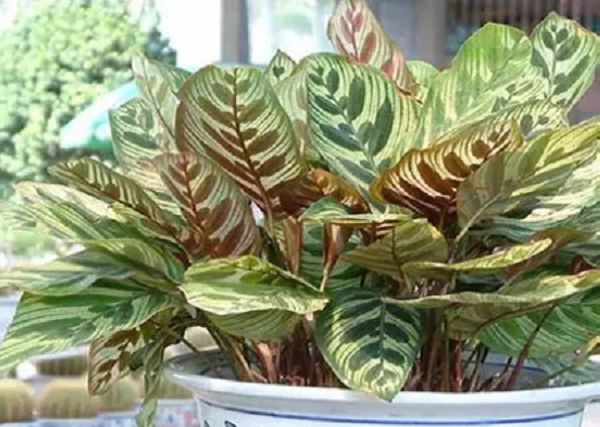
Yellowing leaves on houseplants is something many plant owners have encountered, and it seriously affects the plant's ornamental appeal. There are always reasons behind yellowing leaves, even when it is a natural phenomenon caused by plant metabolism and the replacement of old leaves with new ones. However, for an evergreen Calathea orbifolia, yellowing leaves seem somewhat unreasonable.
In fact, yellowing leaves on Calathea orbifolia are not a random occurrence. If we make mistakes in care and management, yellowing leaves are a natural result. So what exactly is going on? Let's analyze this further below.
1. Lack of light
As everyone knows, the vast majority of plants need photosynthesis to promote growth, and Calathea orbifolia is certainly no exception. If a potted Calathea orbifolia at home is kept in a shaded environment for a long time, its leaves cannot produce chlorophyll through photosynthesis, and over time yellow leaves, or even leaf drop, will occur.
Although Calathea orbifolia does not like being exposed to strong sun, appropriate light is essential to meet its growth needs. So simply place it in a spot where it can receive indirect light to supplement its lighting.
2. Excessive light
In the previous point, I mentioned that insufficient or no light can cause leaves to turn yellow. In fact, excessive light can also cause dead branches and yellow leaves. Especially in the hot summer, when not only temperatures are high but light is also particularly intense, direct strong light on Calathea orbifolia should be avoided.
In this case, if yellowing leaves are caused by excessive light, shade measures should be taken promptly. It is recommended to place it in a semi-shaded spot where it can receive indirect light.
3. Caused by lack of water
Earlier I mentioned that improper lighting causes yellowing leaves on Calathea orbifolia. In addition, insufficient watering is another important cause of yellow leaves. The plant will grow slowly due to long-term water shortage or lack of water supply, and the leaves will compete with each other for water. Some leaves that cannot compete will naturally turn yellow.
When the plant lacks water, we should replenish it promptly. To avoid yellow leaves, we should water thoroughly at regular intervals, giving enough water, but not causing water to accumulate in the pot. Keeping the soil moist and providing the plant with enough water is sufficient.
4. Overwatering
Calathea orbifolia can develop yellow leaves due to insufficient watering or a long-term lack of water supply, but please do not overlook this problem: when overwatering causes water to accumulate in the pot, the plant's roots will rot, which in turn leads to yellow leaves and leaf drop. When you notice that even the young leaves of your Calathea orbifolia are dull yellow and lack luster, while the old leaves show no obvious change, and the stems and leaves are thin and small with wilting new shoots, this indicates that watering has already been excessive.
In fact, the remedy for overwatering is very simple. Just take the plant out of the pot and place it together with the soil in a cool, ventilated place to dry out a bit. Once the potting soil has dried, put it back into the pot. It is only in future water management that everyone needs to pay a bit more attention.