When is the best time to transplant Chinese sweet plum (Sageretia thea)?
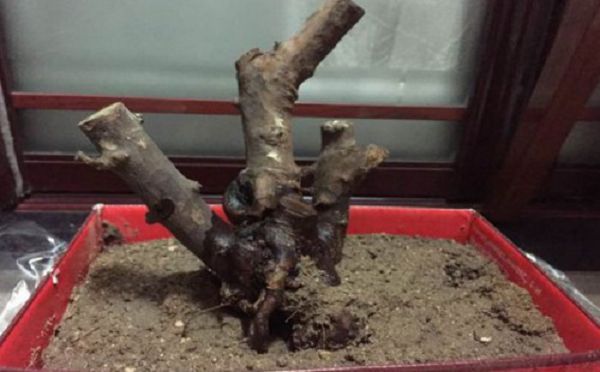
Materials for Chinese sweet plum bonsai can be obtained by growing young seedlings through sowing, cuttings and other methods, since it is difficult to obtain wild-collected stumps in the wild nowadays. And obtaining bonsai material by growing young seedlings is also the most important method.
Since Chinese sweet plum likes to grow in a warm and humid environment, it is very suitable for growth in southern China, so in southern China it generally can remain evergreen all year round, with no obvious dormant period. Therefore, transplanting Chinese sweet plum seedlings can generally be done throughout the year, but transplanting during March-April in spring usually makes it easier for the plant to adapt to the pot and survive.
Although Chinese sweet plum can be transplanted throughout the year, try to avoid doing it during the flowering period, otherwise it will not only easily cause a large number of flowers to drop, but also make it difficult for the plant to adapt to the pot and survive. Moreover, even when transplanting in spring and autumn when the temperature is relatively suitable, it is recommended to transplant seedlings with soil, so that the plant is more likely to adapt to the pot and survive, and more easily restore its normal growth state.
If you are lucky enough to collect Chinese sweet plum wild stumps in the wild, it is usually recommended to transplant them in March-April in spring, and secondly, September-October in autumn when the plant grows relatively slowly can also be used as an alternative transplanting option. However, wild-collected Chinese sweet plum stumps are often relatively large, with well-developed root systems, so it is inevitable that many roots will be damaged during collection. But after collecting the wild stumps and bringing them back, necessary treatment should be carried out in time, and then they should be planted.
First, the roots need to be properly trimmed and the branches cut back, ensuring that the cut ends of the roots and branches remain smooth, and then apply a layer of white latex to the wounds to seal them, avoiding excessive loss of sap that would affect survival. Then soak the stump in clean water for about 4 hours, then take it out and plant it. Before potting, wild stumps generally need to be planted in the ground with moist sand to cultivate the stump for 1-2 years, and after their root systems have become relatively well developed and many new branches have sprouted, potting them makes it easier for them to survive.
During the stump cultivation period, light control, temperature regulation and water management need to be done well, and one week later it is recommended to treat the wounds left after cutting the branches again, to avoid wound infection. White latex can likewise be used to seal the cut ends, preventing pathogen invasion while inhibiting water loss. Through sand cultivation to nurture the stump and by accumulating branches to build up the trunk, its roots and branches can quickly sprout.