What should be noted when growing orchids in traditional soil-based potting media?
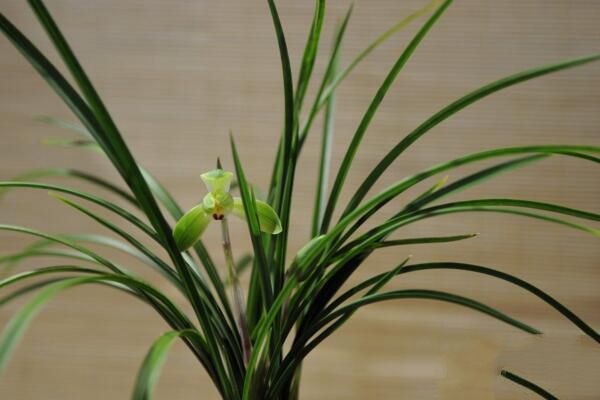
When growing orchids in traditional soil-based potting media, the mountain soil selected should preferably be brown-black or black, the pots should be open-mouthed clay tile pots or "sweating" pots with good air permeability, and watering should follow the principle of "do not water until dry, and when watering, water thoroughly: aim for moist, better on the dry side than too wet." The specific details will be explained in detail below.
I. Mountain soil (orchid soil) is best when brown-black or black
1. Regardless of the color of the mountain soil, it is always best when it is weakly acidic, loose in texture, and well drained. When using soil-based potting media to grow orchids, before potting it must be sifted in batches through a fine sieve, and the dust that passes through the sieve should be discarded. Then spread the sifted mountain soil flat on a concrete surface and let it be exposed to sunlight; use it only after it has been sterilized and disinfected by sunlight.
2. When planting orchids, the soil used must not be too sticky; if the soil is too sticky, a small amount of coarse sand or other granular potting media can be mixed into the soil.
3. The soil used for planting orchids must not be used for too long; generally, after one or two years of growing, the pot must be repotted and the soil changed.
II. Pots should be open-mouthed clay tile pots or "sweating" pots with good air permeability
A drainage layer must be placed at the bottom of the pot, which can prevent the soil from blocking the drainage holes, thereby causing water accumulation and orchid root rot.
III. Daily management
Daily management should focus on "dry growing," and watering should follow the principle of "do not water until dry, and when watering, water thoroughly: aim for moist, better on the dry side than too wet." Never let water accumulate in the potting soil, and be sure to avoid the situation of watering only halfway.
IV. Fertilizing
Soil-based potting media contains a large amount of humus, so in the first year of orchid planting there is no need to apply base fertilizer or top dressing; in the second year, top dressing can be used to fertilize. At the same time, pest control and sterilization work must be done well to prevent pests and diseases from attacking the orchids.
V. Notes on placing potted orchids
Potted orchids can be placed on raised stands, so that the orchids are in an environment with ventilation on all sides, and the air humidity can be relatively lower. At the same time, Selaginella uncinata can be planted on the pot surface to prevent soil from splashing onto the leaves when watering.