What causes a banyan tree to drop its leaves
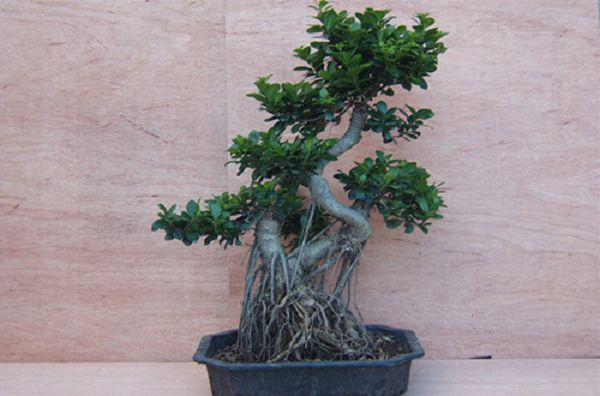
The banyan tree loves a sunny, well-ventilated environment with moist air, and it mainly grows in southern China and Southeast Asia. Below is an explanation of the reasons why a banyan tree drops its leaves.
1. Improper watering: When watering a banyan tree, you must stick to the principle of not watering until the soil is dry, and watering thoroughly when you do. Here, "dry" refers to the surface of the potting soil being dry, not the potting soil being completely dried out. Of course, even if it does dry out completely, it will not cause much harm to the banyan tree in a short time, because the banyan tree's leaves are thick and small, giving it a certain degree of drought tolerance.
2. Improper fertilizing: Fertilizing a banyan tree should be done by applying light fertilizer frequently, avoiding the use of high-concentration chemical fertilizers or unfermented, undecomposed organic fertilizers, otherwise fertilizer burn will occur, with mild cases causing leaf drop and severe cases causing death.
3. Insufficient light: The banyan tree grows well in an environment with sufficient light. If it is kept indoors for a long time (for example, placed indoors for more than half a month in summer), with poor ventilation and insufficient light, and the potting soil does not dry out for a long time, the soil lacks air and the roots rot, leading to leaf drop.
4. Improper soil changing: If the soil is changed during the peak growing season, the tree's roots are damaged, the upward conduction of nutrients is inhibited, and the supply cannot keep up, which leads to leaf drop. Note: some unscrupulous sellers, in order to make the plant more attractive before selling it, will recklessly change the soil without considering the consequences.
5. Temperature reasons: During the high-temperature period in summer, if 30-50% shade is provided, the leaf color will appear more emerald green, but when the temperature is below 32°C, it is best not to provide shade, so as to avoid leaf drop. When spring arrives the weather begins to warm up, but the early spring wind is dry and piercingly cold. A banyan tree that has been kept indoors for a whole winter will become very delicate, especially a banyan tree cultivated indoors at a relatively high temperature. If it is taken outdoors too early, its ability to resist the cold wind is very poor, and a gust of wind can also make it drop its leaves.
6. Caused by pests: The pests that cause leaf drop in banyan trees are mainly red spider mites and scale insects. Although thrips also do harm, this pest only curls leaves and sucks sap, and its harmfulness is somewhat less than the above two, and thrips are also easy to control; you only need to remove and destroy the curled leaves. Red spider mites are relatively small, and the usual damage site is the underside of the leaves. They are caused by poor ventilation and dry air. You can rinse the whole plant with plenty of water and then spray it with acaricides, such as manjing and kemai. Scale insects mostly damage the stems, leaf stalks and other parts. They vary in size and color, and in shape are round, oval, etc. They generally do not move, but they are quite harmful and need to be controlled promptly. You can brush them off with a toothbrush or wipe them clean with a cloth, or spray a 0.2% solution of washing powder or wind-oil, or spray pesticides such as methidathion for control. All of these are effective.
If during the growing season there is a small amount of yellowing and falling leaves, it is a normal metabolic process.