Can you mist the flowers of a kalanchoe while it is blooming?
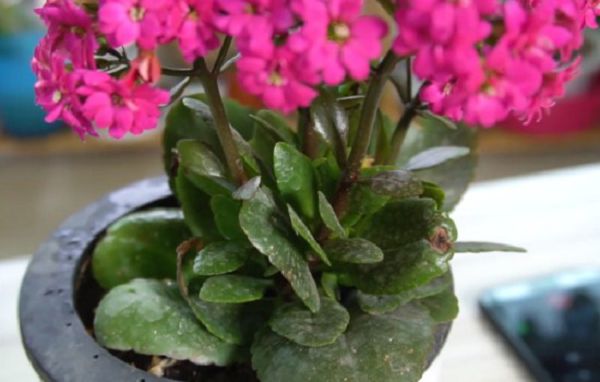
Kalanchoe (Kalanchoe blossfeldiana) prefers a relatively humid growing environment, but at the same time it does not tolerate waterlogging and is in fact rather drought-tolerant. Because its leaves are numerous and broad, and its flowers are abundant and vivid, it has high demands on air humidity. But at the same time, its dense branches and leaves hinder ventilation and light penetration, so it normally needs to be kept in an environment with plenty of light and good airflow, otherwise the plant is prone to poor growth.
But if the air is too dry, it will not only affect the normal growth of the kalanchoe, but if it coincides with the blooming period, it will also affect its flowering performance. So many growers like to mist their kalanchoe during the blooming period, so what about it?
In fact, kalanchoe should not be misted during its blooming period, because if the buds get wet, they are prone to rot and drop off. And if too much misting is done, water droplets will also fall onto the leaves and into the soil, and if the light is also strong, the leaves can easily get scorched. At the same time, if a large amount of water is constantly dripping into the potting soil, it also makes it hard for us to judge the dryness and moisture of the soil, which can easily lead to the plant suffering from drought or waterlogging.
And whether the potting soil is too dry or too wet, it is usually bad for the growth and flowering of the kalanchoe. If the inside of the potting soil is too dry, the kalanchoe's fine roots are prone to dying back, and when watering comes they easily rot and breed harmful bacteria, thus damaging its root system. If the potting soil stays too moist or even waterlogged for a long time, it will not only easily suffocate the plant, but also cause root rot.
So we must not underestimate the harm caused by misting a blooming kalanchoe; it may look like a small detail, but the consequences it triggers can be quite serious. Therefore, kalanchoe must not be misted on its buds or flowers during the blooming period, and if the water does not evaporate in time, the most direct consequence is that the flowers rot and drop off.
Of course, sometimes the growing environment may have rather dry air, which is likewise bad for its growth and flowering. But we cannot mist it, so how should we raise the ambient humidity? Although we cannot mist it directly, we can spray more water mist on the plant, the surrounding space and the ground. That is because the mist is easier to control in quantity and evaporates relatively quickly. But it must be placed in an environment with plenty of light, especially good ventilation, so that the water can evaporate faster.
In addition, there is an even safer and more scientific method: we can also place a basin of clean water beside the potted plant, and as the water transpires upward, it naturally raises the air humidity of the growing environment. That way, without misting the kalanchoe, it can still feel the moisture in the air, which is more helpful for its growth and flowering.