How to prevent root rot and bud drop in potted tree peonies
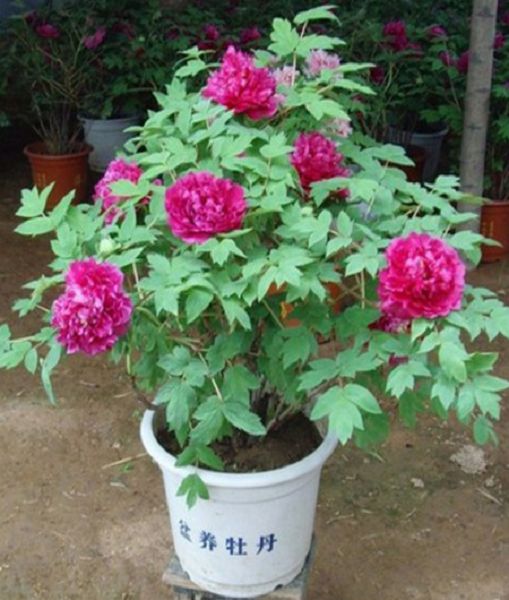
The tree peony (Paeonia suffruticosa) originated in the mountainous areas around the Qinling and Daba ranges in western China, and wild single-petaled tree peony varieties still grow in this region today. The tree peony is a perennial deciduous small shrub with slow growth and a small plant form. It is a precious woody ornamental flower unique to China, with brilliant colors, a rich and dignified appearance, and a great many varieties. It has long been known as the "national beauty and heavenly fragrance" and the "king of flowers," and since ancient times people have regarded it as a symbol of wealth, good fortune, and prosperity. The tree peonies of Luoyang and Heze in Shandong are the most famous.
The tree peony is praised by people of every era not only for its large flowers, beautiful form, brilliant color, and rich fragrance, but also for its high ornamental and medicinal value. The following introduces methods for preventing root rot and bud drop in potted tree peonies:
1. Tree peonies should not be watered too much; water only when the soil has dried. Better dry than wet, and especially avoid waterlogging; during heavy rain, attention should be paid to drainage.
2. Apart from the period of flower bud differentiation and bud formation, when sufficient nitrogen-phosphorus-potassium fertilizer with phosphorus as the main component should be applied, excessive topdressing at other times is not advisable.
3. Choose a loose, fertile, neutral soil rich in humus.
4. After the flowers fade, shaping and pruning should be done in good time, removing excess branches and spent flowers, etc.
5. In early spring, do not move the plants outdoors too early, to prevent the attack of cold air and cold spells; in summer, provide appropriate shade to prevent strong light from scorching them.
The tree peony has long enjoyed the reputation of being the king of flowers. It likes a warm, cool, dry, sunny environment. It likes sunlight but cannot tolerate the scorching sun of summer, and it also tolerates semi-shade, cold, drought, and mild alkalinity; it dislikes waterlogging, fears heat, and fears direct blazing sun. It is suitable for growing in loose, deep, fertile, neutral sandy loam on high, dry ground with good drainage. It grows poorly in acidic or heavy clay soil. When the temperature is above 25°C, the plant will enter a dormant state. The suitable temperature for flowering is 17-20°C, but before flowering it must undergo low-temperature treatment at 1-10°C for 2-3 months.