What are the watering precautions for clivia (Clivia miniata)?
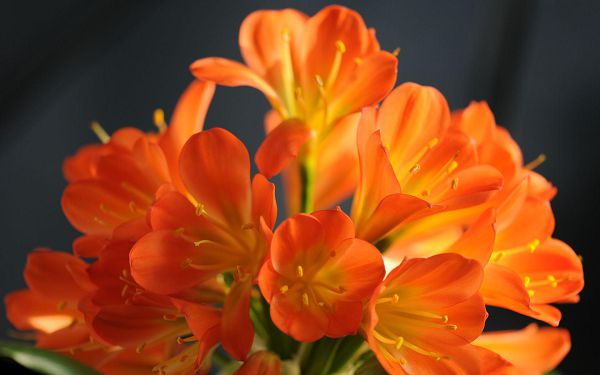
(1) Do not water when the temperature is too high or too low
In summer, the temperature is high, and from 12 noon to 2-3 pm it is even higher. Watering at this time will cause the temperature of the potting soil to drop suddenly, which in turn reduces the water-absorbing capacity of the roots, so that the water the plant needs to cool its leaves cannot be supplied normally, causing the plant to suffer "physiological drought," and in severe cases wilting will occur.
In winter, the temperature is relatively low, and especially when the temperature is below 10°C, the plant's water absorption is noticeably weakened, and it is basically in a semi-dormant state. If a large amount of water is given at this time, the plant not only cannot absorb it, but the potting soil will also remain overly wet for a long time, causing root rot. Therefore, watering in summer should generally be done before 9 am or after 5 pm; in winter it should be done when the room temperature is above 10°C. When it is below 10°C, water less.
(2) The water temperature and soil temperature should be similar
The difference between water temperature and soil temperature should not be too great. Especially in winter, to avoid the plant "catching a chill" due to too great a temperature difference, never use tap water or well water directly to water the plant. The cold water can first be stored indoors for 1-2 days; on the one hand this allows harmful substances in the water to settle out or evaporate, and on the other hand it leaves enough time for the cold water to warm up.
(3) The water quality must be properly handled
For water used on clivia, in cities it is mostly tap water, while in rural areas well water is mostly used. Urban tap water is mostly disinfected and contains chlorine, which is harmful to clivia plants. Groundwater such as well water has high hardness and contains minerals such as calcium and magnesium; long-term use will make the soil alkaline and compacted. Therefore, such water must be stored for 1-2 days, commonly known as "aging the water," and when necessary a small amount of acidic substances such as ferrous sulfate or oxalic acid should be added to neutralize the water quality.
(4) A fixed watering schedule is not advisable
Watering clivia should be based on various factors such as the season, climatic conditions, different growth stages, the plant's health condition, soil structure, and pot material and size to determine whether to water and how much to water.
(5) Use domestic wastewater with caution
Domestic wastewater includes laundry water, dishwashing water, vegetable-washing water, face-washing water, tea water, and rice-rinsing water. Some people, in order to save water, often use domestic wastewater to water plants. Some domestic water contains detergent, and some may contain pesticides, which are harmful to clivia. Rice-rinsing water and tea water tend to attract small flying insects and may even produce a foul odor. Therefore, using domestic wastewater to water plants must be done with caution.