Reasons and Solutions for Yellowing Leaves of Pearl Spiraea Bonsai
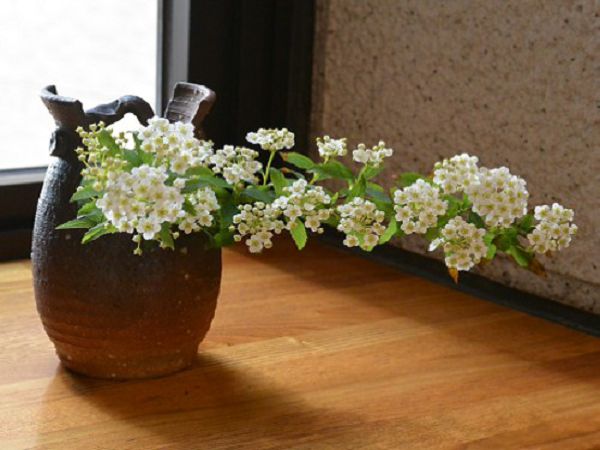
Before the buds of pearl spiraea open, they are shaped like pearls, plump one by one like pearl grains. After blooming, the small white flowers are like snow. Because the buds are white and bright as pearls and the petals and stamens resemble plum blossoms, it is named pearl spiraea. Pearl spiraea is shaped like beads and resembles snow plum in spirit. It grows vigorously, the plant clump is full, and the branches and leaves are delicate. With green leaves and white flowers, its value lies in producing elegant white flowers in midsummer when flowers are scarce, and its flowering period is very long. In particular, it has a killing or inhibitory effect on a variety of harmful bacteria, and is suitable for planting in various types of garden green spaces.
Pearl spiraea, also known as pearl spiraea, belongs to the genus Spiraea in the rose family. It is a deciduous shrub with luxuriant branches and leaves, umbel inflorescences, and dense small white flowers, profuse like accumulated snow. The flowering period is April to May. It is suitable for clump planting, group planting, and mass planting. When grown as a home potted plant for ornament, its pretty and charming appearance when in bloom is even more refreshing. What are the reasons for the leaves of pearl spiraea turning yellow and the leaf tips withering?
1. Usually, overly wet watering causes partial root rot. When there is too much water and moisture, new leaves are prone to turning yellow and dying. Watering should be done after the potting soil dries. Do not water when it is moist. Watering after it dries is beneficial to the growth of new branches and new leaves.
2. Low indoor humidity also easily causes new leaves to turn yellow and dry, especially in winter in air-conditioned rooms or heated rooms where humidity is low. Placing a few basins of water around it can increase humidity, or opening doors and windows at intervals to lower room temperature and increase indoor air circulation can increase indoor humidity and reduce the symptoms of new leaves turning yellow and drying out caused by low humidity.
3. Nutrient deficiency, such as iron deficiency, can also cause chlorosis in new leaves, with leaves turning yellow and dry. A compound fertilizer and mineral additives can be buried around the edge of the pot in the specified amount to supplement the lack of nutrients in the pot and reduce the symptoms of yellowing and dying caused by nutrient deficiency.
Because the potted pearl spiraea bought from the market has low requirements for soil, it is very easy to keep alive. You only need to do the following three things:
1. Water promptly during spring drought. During summer and autumn drought, water thoroughly to keep the soil from becoming dry. Before winter begins, water once with anti-freezing water.
2. It has low requirements for fertilization. When newly transplanted, sufficient base fertilizer should be applied to meet its growth requirements, and generally no additional topdressing is needed. After that, in combination with winter management, applying base fertilizer once every 1-2 years is enough.
3. After flowering, promptly prune off remaining flower branches, diseased and pest-infested branches, and old and weak branches to keep the plant shape neat, avoid nutrient consumption, and promote robust growth with abundant flowers and luxuriant leaves.
Notes on cultivating pearl spiraea:
1. Pearl spiraea has strong adaptability and low fertilizer requirements. Apart from applying a small amount of base fertilizer when newly planted, no further fertilizer is needed afterward, but watering is needed. Generally, water thoroughly 2-3 times from bud break to the flowering period, and water 2-3 times from the Beginning of Autumn to before frost.
2. During the bud stage, spray Huaduo Zhuangdiling to promote strong buds, plump petals, vivid flower color, and rich fragrance.