What soil is best for growing Cymbidium orchids?
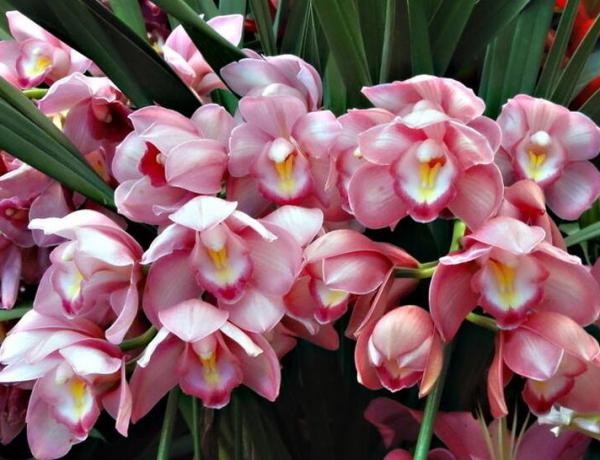
Cymbidium orchids have been a very popular flower variety in China in recent years. They can not only be grown in pots, but are also excellent cut flower material. Cymbidium orchids are artificially hybridized species introduced from abroad, so what soil is better for home cultivation? Let's take a look at home growing tips for Cymbidium orchids.
I. What soil to use for growing Cymbidium orchids
The growing medium for Cymbidium orchids can be moss, fern roots, bark chunks, charcoal, palm bark, coconut shell, broken bricks, tiles, gravel, etc. When planting, first place the orchid seedling into the pot, then fill it with the potting material. You can also tie the root system of the Cymbidium orchid onto a section of wood with bark, and the new roots will grow around the bark, and it will also grow well. It is advisable to choose a tall cylindrical pot with many holes at the bottom and on all four sides, and add charcoal, expanded clay pellets and other materials to the lower part of the pot to help with drainage.
II. Home growing tips for Cymbidium orchids
1. Light: The vigorous growth of Cymbidium orchids is inseparable from light. Generally, apart from the need for shading during the high temperatures of midsummer, sufficient light should be maintained in the other seasons.
2. Watering: When grown at home, the pot soil should be kept moist during the growing period. Water whenever the soil looks dry, and water thoroughly each time. Do not water too frequently, to prevent waterlogging and root rot. In summer's high temperatures, water evaporates quickly, so the frequency of watering should be increased.
3. Fertilizer: During the growing period, appropriate additional fertilizing is needed. Following the principle of "light fertilizer applied frequently," you can apply a slow-release compound solid fertilizer, scattering about ten granules along the edge of the pot, then water, to promote absorption by the plant.
4. Removing shoots: Promptly remove excessive shoots growing from the old pseudobulbs. Shoots that grow after the end of November should be kept.
III. Yellow leaves and scorched edges appearing on Cymbidium orchids
1. Improper transplanting: When repotting and changing the soil, it is best to choose loam rich in humus, to avoid fermentation of organic matter in the pot soil that could damage the flower's root system. If the root system is scorched, root rot will occur, causing the plant to develop yellow leaves or die. It is best to choose a tall cylindrical flower pot with holes at the bottom or on all four sides, use bark chunks or fern roots with good air permeability and water permeability as the growing medium, and add charcoal, expanded clay pellets and other materials to the lower part of the pot to help with drainage.
2. Insufficient light: Cymbidium orchids are light-loving plants, but they dislike direct strong light. They grow best under scattered light, and too weak light will cause poor growth. When growing Cymbidium orchids indoors, it is best to place them on a balcony or in a place with sufficient light, and also pay attention to whether the flower adapts to the micro-environment of that position.
3. Improper watering: Cymbidium orchids like moisture, but their fleshy root system can store water, so they are relatively drought-tolerant. Too much or too frequent watering can easily lead to water accumulating at the bottom of the pot, affecting the root system's air permeability, causing root rot, and the leaves gradually turning yellow. Water according to the principle of watering when dry and letting it dry out between waterings, and flexibly adjust the number of days between waterings according to room temperature. When the temperature is lower, it is best to spray the leaf surface with clean water close to room temperature. Stop water and fertilizer during the flowering period, and resume normal watering and fertilizing after the flowering period. Never apply too much or too concentrated fertilizer.
4. Temperature too low: Cymbidium orchids like a warm environment, especially in the north, where they need to be cared for indoors in winter. If they are hit by cold air, it can also cause damage to the leaves or flowers. In such cases the plant generally will not wither, and you only need to cut off the yellowed leaves and nurse it back slowly.
5. Unsuitable environment: Cymbidium orchids have relatively high requirements for air humidity. In a hot and dry environment, their leaves very easily develop yellow leaves and scorched edges. It is recommended to use a spray bottle to mist the leaf surface every day to increase air humidity. Keep them away from places like air conditioning and heating vents, otherwise the leaves very easily develop scorched edges and yellow leaves. If this happens, you need to move the plant away and then cut off the yellow leaves.