Causes and Solutions for Dry, Withered Leaves on Potted Osmanthus Trees
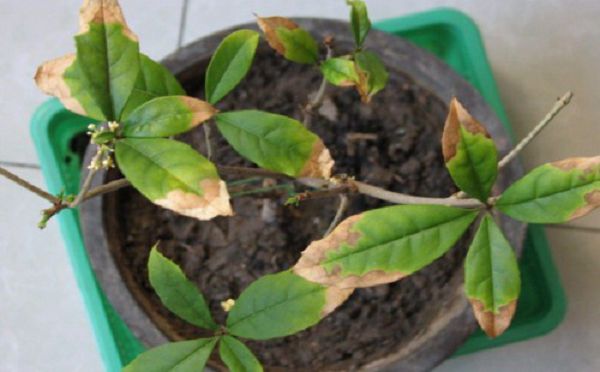
Potted osmanthus trees (Osmanthus fragrans) tend to have fairly high ornamental value when their branches and leaves are lush and they stay evergreen all year round, and they can also release a rich floral fragrance during the flowering season. Sometimes people also like to make bonsai from old osmanthus stumps for viewing. However, whether it is a potted osmanthus tree or a bonsai osmanthus tree, if you want it to maintain good growth and a beautiful plant shape, proper care and management methods are indispensable.
The care and management of potted osmanthus trees is the same as that of most potted flowering plants, with the focus on light, temperature, water, fertilizer, pruning and shaping, and so on. Applying scientific and reasonable care methods will naturally allow you to grow a potted osmanthus tree with lush branches and leaves, but if problems arise in care and management, it is easy to cause growth problems and thereby affect its ornamental value. So, when the leaves of a potted osmanthus tree become dry and withered, what is going on? And what should be done when this happens?
Practice has shown that the phenomena of dry, scorched, or even discolored leaves on osmanthus trees are generally caused by improper care and management. This is mainly manifested in the following aspects:
1. Lack of light
Osmanthus trees generally have relatively high light requirements and like sufficient light. If a potted plant is kept in a shaded environment for a long time, it is prone to dry leaves, scorched edges, and similar phenomena. In this case, we need to gradually provide it with light time until it fully receives light. In this way, the plant's leaf color will gradually return to normal.
2. Unsuitable temperature
Potted osmanthus trees grow suitably in a temperature environment of 15-28°C. If the temperature is too high or too low, it will cause poor growth, and the most obvious manifestation is a change in leaf color and a dry, withered state of the leaves. Therefore, during care and management, we should flexibly regulate it according to its suitable growth temperature.
3. Too low humidity
If a potted osmanthus tree is kept for a long time in a hot, dry environment with high temperatures, the amount of water evaporation will naturally be very large. If water is not replenished in time and suitable humidity is not often maintained, the plant's old leaves will become dry and withered. Usually we can lower the temperature and maintain humidity by spraying water and watering, and after the humidity in the air is increased to above 60%, the phenomenon of dry leaves can basically be effectively curbed.
4. Lack of nutrients
If a potted osmanthus tree lacks nutrients for a long time, it is also prone to dry leaves. Especially during the flowering period, if fertilizer is lacking, it will cause insufficient nutrients, which not only affects the plant's growth but also reduces the quality of flowering. Even during ordinary care and management, we also need to appropriately supply it with potassium fertilizer to improve its own disease resistance and stress resistance.
5. Poor ventilation
Osmanthus trees like to grow in an environment with smooth ventilation, and the air must be clean and pollution-free. If kept in an environment with poor ventilation for a long time or exposed to polluted air, its branches and leaves are prone to drying up. It can be seen that improving ventilation conditions is very important for potted osmanthus to maintain a normal growth state.
6. Suffering from diseases
When osmanthus trees show scorched or dry leaves, it is to a large extent caused by infection and damage from various pathogenic fungi. The most obvious diseases are brown spot disease, blight spot disease, and even anthracnose. These diseases can cause great harm to branches and leaves. The common approach is to immediately isolate the source of the disease, promptly prune the infected branches and leaves, improve ventilation and light conditions, and preferably manage fertilization. In severe cases, pesticides should also be used promptly to spray and kill them.