How to Fertilize Tulips? Detailed Explanation of Key Fertilization Techniques
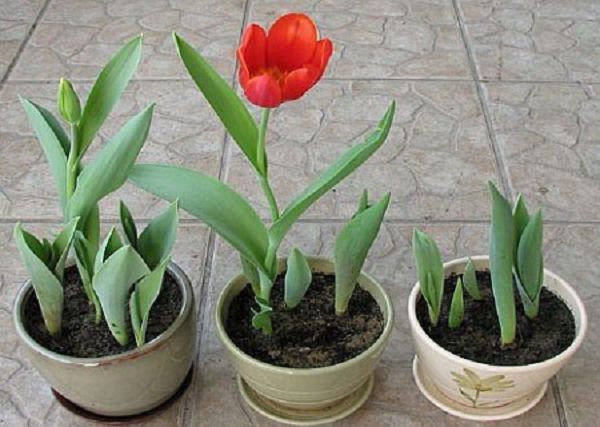
The bulbs of tulips are of great significance for flowering, because the bulbs generally store more nutrients, and when the pot soil lacks fertilizer effectiveness, they can play an important role. It can be seen that fertilization cannot directly affect how early or late tulips bloom. So, do we not need to fertilize the plants?
In fact, this is a misconception. Although nutrients are mostly stored and transported through the bulbs, after the nutrients in the bulbs are consumed, nutrients also need to be replenished. This is often intervened through fertilization, so that the bulbs promptly receive nutrient supplementation. As the saying goes, fertilizing nourishes the bulbs. So, how do you fertilize tulips? Below, the editor will briefly introduce tulip fertilization techniques.
Tulips do not have a large demand for fertilizer, nor do they have high requirements. It is just that if the plants are growing weakly, we can also appropriately apply additional fertilizer. Nitrogen fertilizer mainly promotes growth, and we can add some nitrogen fertilizer in an appropriate amount according to the plant's growth state to promote growth.
When tulips enter the flowering period, we need to fertilize them appropriately to provide the nutrients consumed by normal flowering. Generally, when the plants have grown 2-3 leaves and after the flower scape has emerged, apply a diluted phosphorus and potassium fertilizer solution to the plants once each time. After the flowers bloom, in addition to keeping the pot soil moist, providing sufficient light while avoiding direct strong light, fertilization should be stopped immediately.
But when growing tulips as household potted plants, additional fertilizer is generally applied after rooting and leaf emergence, and it is mostly based on phosphorus and potassium fertilizer. Of course, an appropriate amount of Jinbaobei bacterial fertilizer can also be applied, about once every 2 weeks. This can promote the blooming flowers to have more vivid colors, a stronger fragrance, and higher ornamental value.