How to grow calla lilies? Step-by-step guide to teaching you cultivation techniques
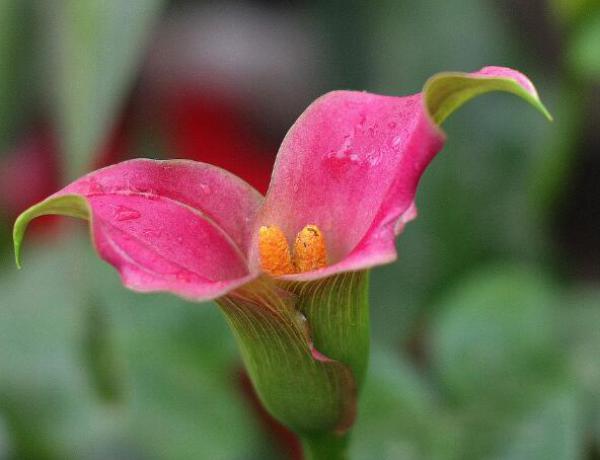
I wonder if everyone has seen this flower, the calla lily? The leaves of the calla lily are emerald green, and the flowers are brightly colored. The common flower colors are red, white and pink, these three colors. They are very beautiful and have high ornamental value. We can try growing a few ourselves, so how do you grow calla lilies?
1. Soil: Calla lilies like loose leaf mold soil with good air permeability and drainage, and leaf mold soil can also effectively retain moisture. At the same time, perlite or peat soil and sand can be mixed in, all of which can effectively maintain the soil's good drainage and air permeability. Because its root system grows on the upper part of the bulb, place some permeable and breathable coal cinders or coarse sand at the bottom layer of the potting soil.
2. Temperature: Calla lilies like a warm environment and are especially not cold-tolerant. They are suitable for growing between 15 degrees and 25 degrees. High and low temperatures will make calla lilies stop growing, or even die. In summer, when it is above 25 degrees, some water should be sprinkled on the leaves to cool them down, or they should be moved to a shady place. In winter, it is best to keep the indoor temperature above 10°C. Too low a temperature may cause cold damage.
3. Humidity: Calla lilies often grow in swamps, and they very much like warm and humid environments. If you want to grow calla lilies at home, then you need to maintain high humidity in their growing environment.
4. Light: Calla lilies like a semi-shady environment and cannot accept direct strong light, otherwise it will scorch the leaves. But if you want calla lilies to bloom more, it is best to let them receive warm morning and evening sunlight. During the hot summer season with strong light, appropriate shading is a must. In winter, when the light becomes weaker, calla lilies can be placed in a sunny spot indoors for supplemental light.
5. Watering: Calla lilies like to grow in a relatively moist environment, so during cultivation, watering and care measures must be done well. When the soil is slightly dry, water it promptly, and the soil must also be watered thoroughly, so as to ensure its moist environment. But do not water too much. Once there is too much water and it accumulates, it will affect its growth, and root rot may even occur. In winter, because the temperature is low, water evaporates very slowly, so the watering frequency can be reduced.
6. Fertilizing: During the growth period, you can apply decomposed bean cake water to calla lilies once every 20 days; during the period when calla lilies grow most rapidly, you can apply dilute fertilizer water once every ten days, with fertilizers mainly based on nitrogen, phosphorus and potassium fertilizers. Before the flowering period, reduce the application of nitrogen fertilizer and increase the application of phosphorus and potassium fertilizers. Do not apply too much fertilizer, and do not let it splash onto the leaves, so as to avoid causing root burn and leaf scorch and yellowing in the plant.
7. Pest and disease control: The more common pests and diseases of calla lilies include: leaf mold, leaf spot, root rot, and seed flies. Leaf mold will make the leaves turn yellow and produce spots of different sizes. Leaf spot produces light brown to yellow-brown lesions. Root rot causes the lower leaves of the plant to wither first, and then spreads to the inner leaves. Different diseases should be treated with different control methods. You can go to the market to choose control solutions specifically targeting the disease. Overall, plant management should usually be strengthened and the room should be kept ventilated.