What should I do when the new leaves of the azalea (Rhododendron) dry up, turn black, and fall off at the slightest touch?
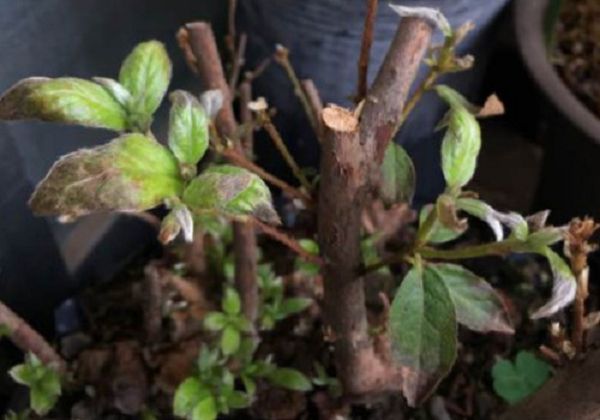
Azaleas not only bloom brilliantly and gorgeously with high ornamental value, but they are also very well suited for foliage viewing, since they are evergreen shrubs. Grown as potted plants, they look beautiful when the flowers are abundant and the leaves are green. When the growing season arrives, we all eagerly hope they will sprout green growth on schedule and push out fresh, emerald new shoots. But if we run into a situation where their new leaves dry up, turn black, and fall off at the slightest touch, it will inevitably reduce their ornamental appeal.
When this happens to the new leaves of a potted azalea, it is inevitably a sign of poor growth, so we need to promptly investigate the cause, find the crux of the problem, and then take corresponding remedial measures so it can return to a normal growth state as soon as possible, rather than letting it go unchecked and allowing the problem to worsen. If that happens, it is not only unattractive but also affects normal growth.
When the new leaves of an azalea dry up, turn black, and fall off at the slightest touch, it is generally caused by root damage or excessive light intensity. There are quite a few factors behind root rot, and the most common may be caused by overwatering or too high a fertilizer concentration. Therefore, root rot should be handled according to the situation. If the condition is relatively mild, drain promptly when there is overwatering, and if there is over-fertilizing, water thoroughly in time to dilute it.
But if the root rot is relatively severe, repot it and change the soil in time. Before potting, however, trim the roots first, mainly cutting off the damaged roots, then sterilize and disinfect them, and then use a little rooting agent. Or after potting, when watering to settle the roots, drip a few drops of rooting solution into the water. During the recovery period, when misting to keep moisture, you can also use rooting solution 1-2 times to promote the plant to re-root.
In addition, although azaleas are relatively fond of light and warmth, if the light intensity is too strong, it can also easily sunburn the plant's new leaves, especially when air humidity is relatively low, new leaves are often more easily sunburned. So the azalea's leaves will dry up, turn black, and fall off at the slightest touch. In this case, we should promptly take shading measures to avoid it being exposed to the scorching sun for a long time and making the situation worse.
Of course, there is another possibility, which is that the plant has been infected by a disease, mainly caused by an unsuitable growing environment, such as poor ventilation, lack of light, excessive humidity, and other factors. For this reason, we also need to create a relatively suitable growing environment for the plant, so that the poor growth condition can improve until it disappears.