What fertilizer is better to apply when growing bowl lotus?
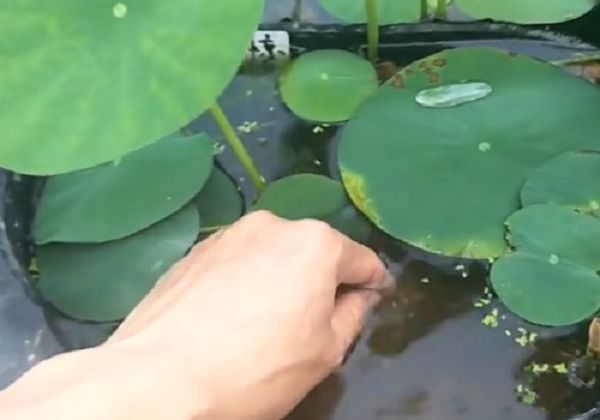
Bowl lotus is a plant that loves fertilizer, but it does not like concentrated fertilizer and is even more afraid of raw fertilizer. Generally, the principle of light fertilizer applied frequently is adopted, so as to ensure the plant maintains good growth and blooms with large, beautiful flowers as scheduled. But after all, it is quite fond of fertilizer, and both growth and flowering consume a lot of nutrients, so fertilization not only needs to be timely, but also requires the right fertilizer.
When fertilizing bowl lotus, organic fertilizer is generally the main choice. It can be soybean cake fertilizer or sesame cake fertilizer, but before use it must be fully fermented and decomposed. When using such organic fertilizer, it is generally mixed with pond mud and kneaded into small balls, then held with a tool such as chopsticks and pressed into the pot mud.
Of course, we can also use nitrogen-phosphorus-potassium ternary compound slow-release fertilizer, which is generally in granular form. When using it, we can first scatter it into the middle of the water surface without stirring the water, and let it slowly dissolve. At the same time, avoid the leaves of the bowl lotus, do not let it float on the water surface, and do not press it directly into the pond mud at the bottom of the pot.
Some gardening friends may ask whether urea fertilizer can be applied. In fact, during the growing season of bowl lotus, urea fertilizer is generally not applied, mainly because it is a quick-dissolving high-nitrogen fertilizer, and blind application can easily cause fertilizer damage, especially when the bowl lotus has just differentiated and formed flower buds. In addition, because of its high nitrogen content, it can easily cause excessive vigorous growth of the plant, causing its rhizomes and even leaves to grow excessively, thereby reducing the number of flowers and lowering the flowering quality.
If you are quite handy, you can also make your own fermented fertilizer. You can use 30% decomposed cake fertilizer, 30% plant ash, 35% bone meal, and 5% slow-release fertilizer, then mix them evenly with some moist clay and knead them into balls for use. Of course, according to the growth of the bowl lotus, we can also add a little monopotassium phosphate and boron fertilizer as appropriate, and likewise knead them into balls for later use.
When using, bury the balls in the center of the sludge at the bottom of the pot, then cover them well with sludge, and keep burying one in each flower pot every month. If it is a small pot, the amount can be appropriately reduced. If we have diammonium phosphate, we can also use it instead. But the method of applying diammonium phosphate is the same as that of nitrogen-phosphorus-potassium ternary compound fertilizer, and it should also not be buried into the soil at the bottom of the pot.