Do the aerial roots that Phalaenopsis orchids grow need to be buried in soil?
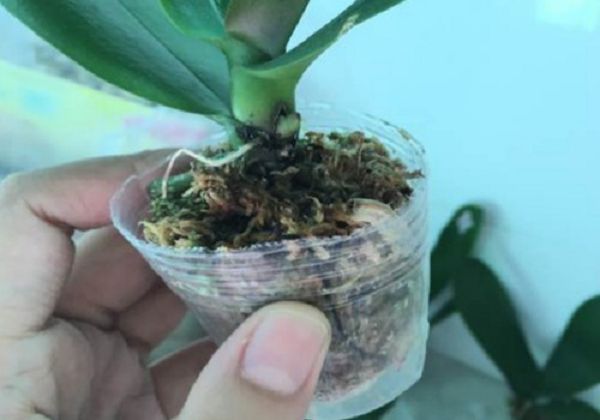
Phalaenopsis orchids are very beautiful when in bloom, and many enthusiasts grow them as potted plants at home to enjoy. But Phalaenopsis is a flowering plant that grows aerial roots, and these aerial roots generally grow around the leaves.
As for whether the aerial roots that Phalaenopsis orchids grow need to be buried with soil, we first need to understand what role these aerial roots play for the orchid. Facts have shown that the aerial roots of Phalaenopsis orchids have the function of absorbing nutrients and moisture from the air, and can also carry out photosynthesis to form nutrients.
In other words, besides obtaining nutrients and moisture from the soil, Phalaenopsis orchids also need to supplement them from the air. When the air humidity is relatively high, the plant will grow aerial roots around the leaves, so that it can obtain some nutrients and moisture from the air, making the plant grow more vigorously.
If we bury these long and thick aerial roots with soil, leaving aside whether they will grow or rot, at the very least it will affect their absorption of nutrients and moisture from the air. So the plant will get fewer nutrients from the air, which will inevitably affect the plant's growth to a certain extent, and therefore there is no need, nor is it suitable, to bury these aerial roots.
Moreover, if the humidity inside the pot is relatively high, burying these aerial roots in the soil will often easily cause the aerial roots to rot, thereby producing harmful bacteria in the pot, which in turn harms the plant. Therefore, letting these aerial roots remain outside the soil is actually more beneficial to the plant's growth.
Of course, we can also bury some aerial roots in the soil, except that the substrate we use cannot be pure soil, but should be a mixed substrate made from sphagnum moss, bark, coconut husk, peat soil, etc., which have relatively strong permeability and water retention. Only in this way will it not cause fatal harm to the aerial roots. If heavy, sticky soil is used to bury them, it will inevitably affect their breathing, causing them to suffocate and die.