What to Do When Orchid Leaves Turn Yellow? Causes and Solutions
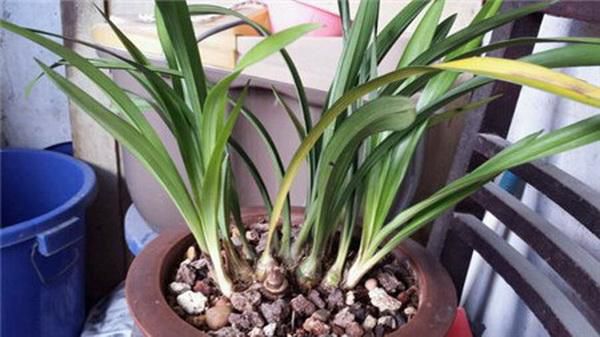
Orchid, also known as Chinese orchid, terrestrial orchid, or orchid grass, is a perennial herbaceous flower with fleshy roots in the genus Cymbidium of the family Orchidaceae. It originated in China, where it is widely distributed in Yunnan, Guizhou, Sichuan and Tibet. It is a traditional precious flower of China and a famous flower of the world.
People have always regarded the orchid as a symbol of nobility and elegance, and together with plum, orchid, bamboo and chrysanthemum it is known as the "Four Gentlemen." With its delicate fragrance and understated elegance, the orchid, together with chrysanthemum, narcissus and calamus, is called the "Four Elegant Flowers and Plants," and the orchid ranks first among the four. The orchid is plain and unadorned, with evergreen leaves that are soft yet firm, and flowers with a distant, delicate fragrance. It has extremely high ornamental value and is a treasure for display in the living room, bedroom, or as an accent in the study or entrance hall.
Improper Watering Causes Yellow Orchid Leaves
Cause of Yellow Leaves
Orchids prefer a moist growing environment and have relatively high requirements for air humidity. When watering is insufficient and the root system is damaged, or when the air is too dry, orchid leaves will turn yellow. Conversely, if watered too much, water accumulates in the pot and drainage is poor, which causes the orchid roots to suffocate and rot, leading to yellow leaves and even death.
Solutions
Master the technique of watering: water according to how dry the potting soil is, and water appropriately and at the right time. Avoid the potting soil being too dry or too wet. Pay attention to the air humidity of the orchid's growing environment; if the air is too dry, spray water frequently to maintain humidity.
Improper Fertilization Causes Yellow Orchid Leaves
Cause of Yellow Leaves
If yellowing of orchid leaves is caused by fertilization, it is generally because too much fertilizer was applied at one time, causing the orchid's roots and stems to be scorched and the leaves to turn yellow. Orchids actually do not need heavy fertilizer for growth, so fertilization should be light and frequent.
Solutions
In terms of fertilization, orchids need light, skillful application; never apply concentrated fertilizer, heavy fertilizer, or undecomposed liquid fertilizer. On the day after fertilizing, water once with clear water to dilute the fertilizer and prevent fertilizer damage.
Light Causes Yellow Orchid Leaves
Cause of Yellow Leaves
Orchids have relatively strict light requirements; they prefer a more shaded growing environment and are rather afraid of strong sun, yet cannot lack sunlight. Therefore, whether light is insufficient or too intense, the growth of the orchid will be affected. With strong light, sunscald is likely to occur, injuring the orchid's leaves and causing them to turn yellow; with weak light, the orchid plant does not get enough nutrients, and the leaves easily turn yellow.
Solutions
Orchids prefer partial shade. Apart from full-sun care in early spring and winter, at other times place the plant in a well-ventilated spot and avoid direct sunlight.
Pests and Diseases Cause Yellow Orchid Leaves
Cause of Yellow Leaves
If an orchid suffers from pests or diseases, yellowing of the leaves will also occur, such as leaf spot disease and anthracnose. Root rot can also cause leaves to turn yellow, or even cause more serious harm.
Solutions
Generally, when pests or diseases appear on an orchid, the effect on the leaves is a gradual process. In the early stages of the pest or disease outbreak, if it is discovered in time, countermeasures can be taken. Based on the symptoms appearing on the orchid, determine which pest or disease the orchid has encountered, and choose the corresponding treatment measures, such as spraying pesticide or manual control, which will alleviate the yellowing of the orchid leaves.
Metabolism Causes Yellow Orchid Leaves
Cause of Yellow Leaves
As an orchid grows, it needs to undergo the replacement of old and new parts along with the plant's growth. Because of the need to develop new leaves, the old leaves will not continue to grow, but instead turn yellow, wither and fall off.
Solutions
Yellowing of leaves caused by metabolism is a normal phenomenon and requires no excessive worry.