What are the winter care methods for orchids?
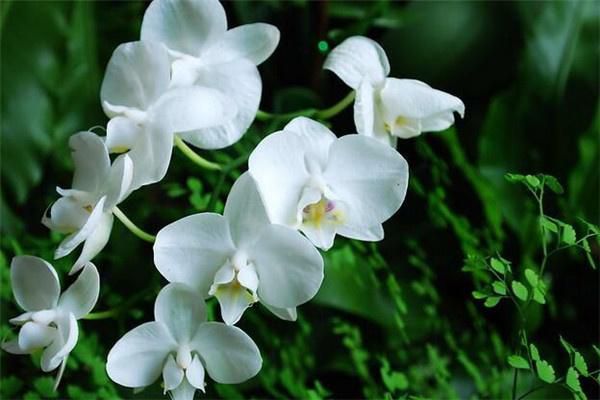
In the winter care of orchids, light is a very important part. All things grow by the sun, and orchids are no exception. Below, let us learn together about the winter care methods for orchids.
Light in winter is very important. In the Central Plains region, deep autumn begins around November each year. In this season, most plants have stopped growing and entered dormancy, and orchids are no exception.
In fact, orchid buds have already formed each autumn, and they must be nurtured through a whole winter before breaking through the soil in spring.
When winter arrives, on the surface the orchid appears to have stopped growing and entered dormancy, but in fact subtle changes are constantly taking place inside the pot: the bud points and pseudobulbs are constantly swelling, and the orchid roots are also growing slowly. At this time, not only should the orchid leaves receive full light, but the pot should also receive direct sunlight. Only in this way can the temperature inside the pot be raised, photosynthesis be promoted, and the orchid buds and pseudobulbs accumulate more nutrients and become more robust.
After being nurtured through a winter in this way, the orchid buds are fully prepared to emerge in spring. Once spring arrives, having accumulated much and now bursting forth, they will be unstoppable, not only sprouting early but also more likely to produce strong seedlings.
Under natural conditions in the Central Plains region, producing two generations of strong seedlings a year is no problem. Because to the south of my orchid house there is a wall more than 2 m high, when winter comes, due to the slanting sunlight, some orchids on the south side cannot get sunlight. So from November each year to April of the following year, I change the orchid shelves on the north side into a stepped shape, so that the pots can fully receive direct sunlight. I once did a test: the temperature inside pots that received light and pots that did not differed by 3 to 5 degrees during the day. Because it is a glass house, the temperature inside rises quickly when sunlight enters, so whether day or night, as long as the lowest temperature is not below 0 degrees, I open the windows a little. This not only maintains ventilation, but also controls the daytime temperature from rising too high, while allowing the nighttime temperature to drop, widening the temperature difference.
After sufficient vernalization and sufficient direct sunlight in this way, the orchid lays a good foundation for the next year's growth.