A Detailed Guide to Succulent Growing Methods and Watering Techniques
I. Light
Succulents love sun. During normal care, let them get plenty of sunlight. Sufficient light helps succulents accumulate nutrients and quickly develop color and a good appearance. Only when the summer sunlight is too strong should you provide appropriate shade to avoid sunburn on the leaves and sunscald disease.
II. Temperature
Succulents love warmth. When summer temperatures are too high, succulents go dormant, so move the potted plants to a relatively cool place and control water appropriately. When winter temperatures are too low, succulents also go dormant, so move the potted plants indoors for care, keep the care temperature above 5°C, and control water appropriately or even stop watering.
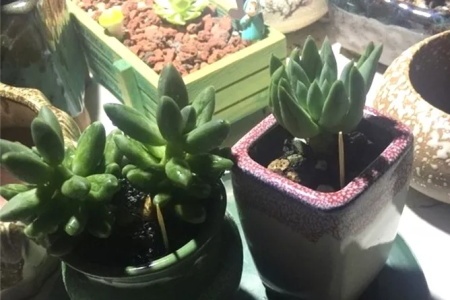
III. Watering
When watering succulents in spring and autumn, it is best to follow the watering principle of "water thoroughly only after the soil has dried out." If the pot is small, water thoroughly about once a week. When watering succulents in summer and winter, you can observe whether the leaves are wrinkling and water just a little along the edge of the pot.
IV. Fertilizing
Succulents do not have a high demand for fertilizer and water. You only need to mix a small amount of cake fertilizer and chicken manure into the soil at the bottom of the pot as a base fertilizer when repotting and changing the soil each spring. If you do not want to repot, you can sprinkle a little slow-release fertilizer on the soil surface to slowly provide nutrients to the succulents.
V. Ventilation
When growing succulents at home, be sure to pay attention to ventilation in the care environment. Good ventilation can prevent the occurrence of various pests and diseases. In addition, in spring and summer, you can also spray the succulents once every half month with carbendazim and Huahuashen to prevent pests and diseases.