What causes white alkali to form on the surface of a Dendrobium pot?
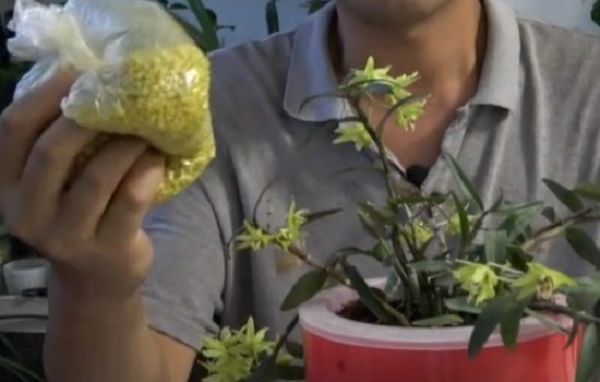
Many flower lovers like to grow some flowering plants at home, not only for enjoyment, but also to decorate the environment and purify the air, making people feel refreshed. Moreover, some flowering plants can even be used as medicine to treat illnesses or for dietary therapy and health preservation. Dendrobium is just such a flowering plant that combines ornamental, medicinal, and health-preserving uses all in one.
But growing flowering plants in pots requires us to devote a certain amount of time and energy to caring for them so that they can fully realize their value. Dendrobium, in particular, being such a multifunctional and multi-purpose flowering plant, usually requires even more time and energy to care for. And attention to details is also very important, as it largely affects the plant's growth and ornamental appeal.
Many gardening friends have encountered the phenomenon of white alkali forming on the pot surface while growing Dendrobium, and this is often something people tend to overlook. In fact, when this happens with potted plants, everyone must pay attention to it, otherwise it will affect the plant's normal growth going forward.
When white alkali appears on the surface of a Dendrobium pot, it is often caused by improper water quality used for watering, mostly due to frequently using hard water to water the plant. Or it may be caused by choosing the wrong fertilizer, mostly due to applying chemical fertilizers or poor-quality compound fertilizers. Alkalization in the pot is detrimental to Dendrobium's growth, because this plant itself prefers slightly acidic conditions.
At this point, we need to focus on examining the color of the substrate when it was first potted versus its current color, and then compare them. If the situation is not very serious, when watering later, use soft water, and it is best to add a few drops of an acidic substance to the water to adjust the pH of the substrate, making it more suitable for Dendrobium's growth. Generally, after using slightly acidic soft water several times in a row for Dendrobium, the situation can be improved, and afterward you only need to water with clean water.
If it is caused by choosing the wrong fertilizer when fertilizing, it is recommended to avoid applying inferior compound fertilizers, and even more so to avoid chemical fertilizers. Generally, it is recommended to apply some decomposed organic fertilizers, such as soybean water, sheep manure, etc. If you really must use purchased fertilizer, slow-release fertilizer is recommended. And the amount of slow-release fertilizer does not need to be too much, nor does the frequency need to be too high; during the growing season, just scatter about 10 or so granules into the pot every 1-2 months.