How to grow hibiscus? These care tips you need to master
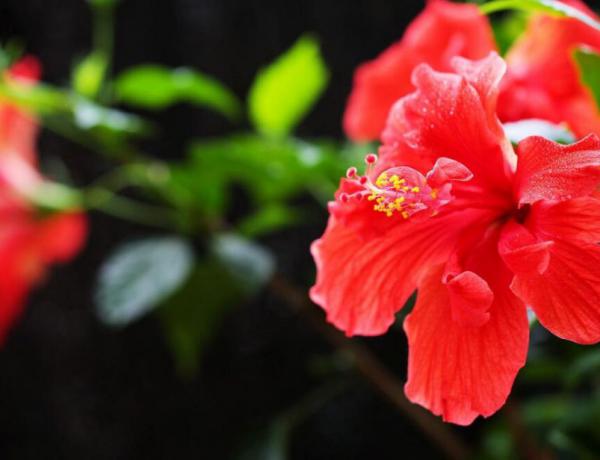
Hibiscus is what we often call zhujin (Chinese hibiscus). It has one characteristic: it can bloom continuously without interruption. As long as the plant is robust enough and the root system is developed enough, under proper care it can bloom uninterrupted 365 days a year.
First, if we want hibiscus to grow well and bloom for a long time, we must give it sufficient light. Hibiscus is a plant that loves light very much and must have full sun. If light is insufficient, the branches will grow leggy and fail to bloom. Another thing is to prepare good soil for it. Hibiscus is not strict about soil requirements.
But if we want it to grow well, with leaves that do not turn yellow and with uninterrupted blooming, we must prepare a loose, breathable, nutrient-containing, slightly acidic soil. Xiao Qi generally uses river sand, fully fermented pine needle soil, and nutrient soil mixed at a 1:1:1 ratio. Pine needle soil contains acidity, nutrient soil supplements nutrients, and river sand can increase the soil's water permeability. On the premise of well-prepared soil, the watering principle is: when the surface of the potting soil is dry, water it thoroughly in time.
Another thing is reasonable fertilization. We know that as long as the temperature is high and can be kept above 15 degrees, hibiscus will grow continuously and bloom continuously, so we must keep up with fertilization. How to choose fertilizer for it? When mixing soil, we can add some base fertilizer to the potting soil. Choose fully fermented sheep manure or cow manure, both are fine. We can also add a little granular slow-release fertilizer.
A multi-element one is fine. Normally, about every half a year, sprinkle some multi-element slow-release fertilizer on the surface of the potting soil. As long as the temperature is suitable and it is growing normally, give it 2 to 3 applications per month of fertilizer with a high phosphorus and potassium content. High phosphorus and potassium content, while also containing other elements, will provide enough phosphorus and potassium without lacking other elements, so there will be no yellow leaves and no stunted seedlings, and it will keep growing and continuously produce flower buds to bloom.
Another thing is reasonable pruning. How do you prune hibiscus? If you do not prune hibiscus, its ability to branch out side branches is very, very weak, and it will just keep growing upward on one branch. So when we see that the hibiscus branches have grown relatively long, cut them back in time. After cutting back, it will grow side buds again from the aged branches.
After the side buds grow out, they will soon produce flower buds and bloom. So on the premise of ensuring that the hibiscus plant has a good shape, as much as possible, after the flowers finish and the branches grow long, cut them back in time, cutting them back to the woody part. In this way, the new buds that emerge can bloom. With continuous pruning and continuous production of side buds, when there are many side buds, there will be more flowers.
Hibiscus is not difficult to grow. It is a typical lazy-person flower and a typical variety that blooms frequently. As long as the temperature is kept above 15 degrees, it gets sufficient light, has well-prepared soil, is not short of water, is not short of fertilizer, and has a certain amount of ventilation, the hibiscus you grow will bloom continuously 365 days a year, all year round, and the more it blooms, the more it fills the pot.