Reasons Why Rain Lilies Don't Bloom and How to Fix It
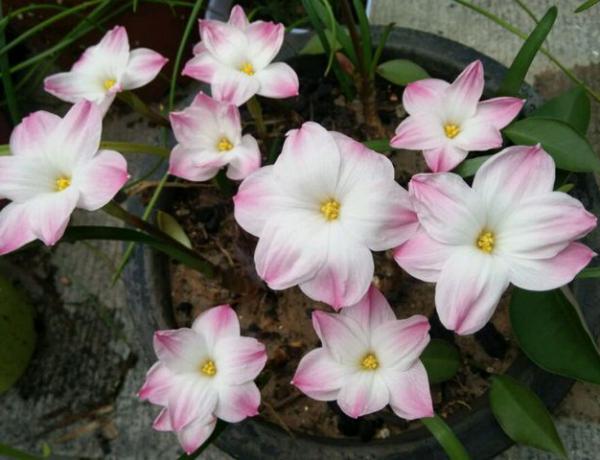
Rain lilies (Zephyranthes) are plants in the Amaryllidaceae family and a general name for several similar bulbous plants. They usually bloom in spring and summer, and are especially easy to flower after a rain shower. Rain lilies come in many colors, including red, pink, yellow, bright red, and more. They are colorful, beautiful, and very easy to grow.
Whether planted in the ground, in a yard, or in flower pots, they easily fill a pot with blooms, growing into a big clump or a large patch. Some gardening friends told me that their potted rain lilies at home are still growing very slowly by May, or even not blooming at all. What should they do?
If your potted rain lilies at home grow slowly, send up few shoots, and bloom little, then you need to check the potting soil and the growing environment. The pot of pink rain lilies I grow, planted in an empty oil drum no less, has now opened many flowers, blooming several times in a month. They bloom not only when it rains but also when the sun comes out.
Solutions for rain lilies that won't bloom.
First, the potting soil should be fertile and loose. If the soil is compacted and poor, extremely hard, and has no fertility at all, with no fertilizer given for several years, then it will grow very slowly and cannot absorb nutrients. Getting it to bloom and grow fast will then be very difficult. So repot it in time, or add some fertile soil, or move it to a slightly larger pot and prepare some dark, fertile leaf mold and peat soil for planting, adding more organic fertilizer. This way it will not only grow fast but also produce more small bulbs.
Second, there must be enough light and good sunshine. Don't keep it on the inner side of a balcony or indoors all the time, because the ventilation and light there are clearly not as good as outside. May is its peak growing season, in spring and early summer, so put it outdoors more. It is called the rain lily because it loves rain and sun, and only then can it grow especially lush and healthy, with glossy green leaves and flower buds constantly appearing.
Third, fertilize more and water regularly. As temperatures rise and light gets stronger, it grows faster too. Keep the soil slightly moist, not too dry, as long as the potting soil doesn't become waterlogged. Also give it some fertilizer once a month. If you don't have fertilizer, add some humus soil or peat soil; if you have fertilizer, give fertilizer. It is not picky about fertilizer at all. Whatever fertilizer you have at home, give that. If you really have none, water it with some fermented rice-washing water. Only with fertilizer will it bloom frequently. Why do some gardeners' rain lilies bloom only once? That comes down to fertilizer and light. When rain lilies are well cared for, they often bloom throughout the year, and the flowering amount is very large.
Every year, repot it once. Dig out all the bulbs, then plant them in separate pots. Not only will you get several more pots, but after switching to fresh, fertile potting soil, it will grow madly and fill the pot again. Grown this way, rain lilies can bloom several times a month, no matter whether it is sunny or rainy.