How to grow potted cotton rose hibiscus? Care methods and precautions
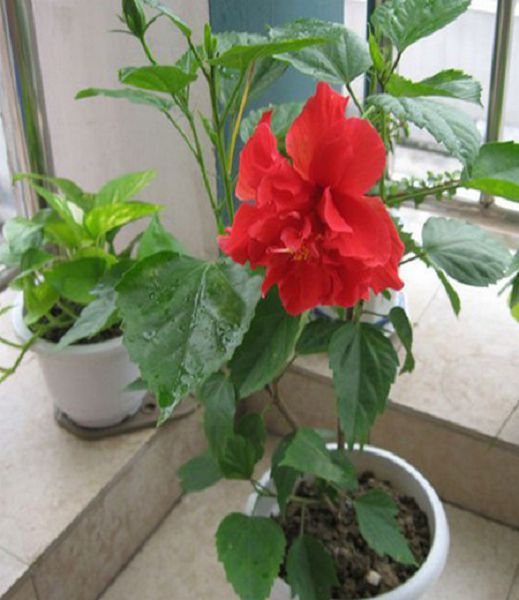
The cotton rose hibiscus originates from Hunan in our country and can be cultivated in many places, whether indoors in pots, in front of and behind courtyards, or along roads and in parks. The cotton rose hibiscus is a very beautiful flowering tree species and has been deeply loved by people since ancient times, with extremely high ornamental value. So how do you plant cotton rose hibiscus? Let us go and take a look together.
The cotton rose hibiscus is a deep-rooted plant, with thick roots that are slightly fleshy. It prefers a warm, humid environment with ample sunlight, is also drought-tolerant, and slightly shade-tolerant. It is robust by nature and has no strict requirements for soil quality; it grows best in loose, breathable, well-drained sandy loam soil. For its cultivation, a spot with good ventilation and fertile soil should be chosen, and cultivation near water is especially ideal.
?
The cotton rose hibiscus can be propagated by cuttings, division, or sowing. Cuttings are best taken from February to March. Choose moist sandy loam or clean river sand, and use 1- to 2-year-old vigorous branches 10 to 15 cm long as cuttings. Before inserting, soak the base of the cuttings in a potassium permanganate solution at a concentration of 3 to 4 g/L for 15 to 30 minutes. The insertion depth should be 2/3 of the cutting length. After inserting and watering, cover with film to keep warm and maintain soil moisture; roots can form after about 1 month, and they can bloom the following year.
Environment: For pot soil selection, potted cotton rose hibiscus is best grown in a relatively large porcelain pot or unglazed clay pot. It prefers a loose, fertile, well-drained and breathable growing medium, and the pot soil should be kept moist during the growing season.
Soil: The cotton rose hibiscus has no strict requirements for soil, but it grows best in fertile, moist, well-drained sandy soil. It prefers fertile, moist, well-drained sandy loam.
Light: The cotton rose hibiscus prefers an environment with ample sunlight and is suitable for growing in a sunny spot; it tolerates partial shade. It likes light and is slightly shade-tolerant, so when grown indoors it is best placed on a sunny south-facing balcony for care.
Temperature: The cotton rose hibiscus has relatively poor cold tolerance. In winter it should be moved indoors, with the temperature kept at 0°C to 10°C, allowing it to enter natural dormancy. The cotton rose hibiscus prefers a warm, humid climate, and a moist micro-environment should be maintained for it.
Watering: The cotton rose hibiscus is not drought-tolerant, so during the growing season sufficient water is needed to meet its growth requirements. When the flower buds show color, water should be withheld appropriately to control leaf growth and concentrate nutrients in the flowers. In winter, watering should be reduced. The cotton rose hibiscus has relatively high water requirements, and attention should also be paid to the air humidity of the surrounding micro-environment. During the growing season, sufficient water is needed, and spraying the ground with water can create humidity in the micro-environment.
Fertilizing: The cotton rose hibiscus needs more fertilizer and water during the spring budding period, and a small amount of phosphorus and potassium fertilizer should be applied before and after the flowering period. Each winter or spring, trenches can be opened around the plant and some decomposed organic fertilizer applied to promote vigorous growth and abundant flowers and lush leaves. During the growing season, fertilizing once every half month is sufficient. Apply additional fertilizer before flowering; when flowering, apply urea plus an appropriate amount of phosphorus fertilizer scattered at the root area under the canopy, then water, which can make the flower color more vivid.
Pruning: The cotton rose hibiscus tolerates pruning well and can be pruned into shape as needed; cut up dead branches and withered leaves and remove them to ensure light penetration. In winter, attention should be paid to cold protection. It is also best to cultivate its plant shape into a shrub form.
Pests: The common red spider mite is the most common pest and disease of the cotton rose hibiscus and can be sprayed with 73% propargite 3000-fold solution or 20% amitraz emulsifiable concentrate 1000-fold solution. The harm of the small green leafhopper and cotton leafhopper should also not be underestimated, and they can be sprayed with 5% carbaryl powder.