White Orchid Tree Planting and Cultivation Techniques and Pest and Disease Control Methods
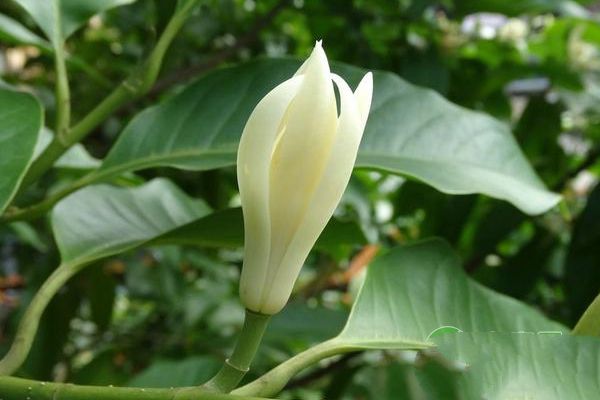
White orchid trees have a long flowering period and deep green leaves, making them a much-loved ornamental and greening tree for gardens. So do you know how to grow white orchid trees? Do you know how to control white orchid tree pests and diseases? If not, take a quick look at the white orchid tree pest and disease control methods compiled below.
Ecological habits of the white orchid tree:
The white orchid tree likes warmth and is not cold-tolerant. In the north, potted plants should be moved indoors in winter and placed in a sunny spot, with the room temperature kept above 12°C, with 15°C being most suitable; under such temperature conditions, it can remain evergreen without dropping leaves. If it is frostbitten and loses its leaves in winter, it will affect flowering the following year. The white orchid tree likes sunlight and is not shade-tolerant. After the weather warms up in spring, it should be moved outdoors and placed in a sunny spot. In summer, when the climate is hot and the air is dry, it can be appropriately shaded, and watered and misted thoroughly.
The white orchid tree likes water and is not tolerant of drought, but fears waterlogging. If the leaves are found to turn reddish, it means the root system has suffered water damage, and watering should be stopped or reduced, otherwise it will cause leaf drop. After the weather turns cool in autumn, watering should be reduced. To prevent water accumulation, more broken bricks and tiles can be placed at the bottom of the pot to facilitate drainage and avoid root rot and yellow leaves.
The white orchid tree likes acidity, and the soil should preferably be acidic or slightly acidic sandy loam. Because the soil or water in the north is mostly on the alkaline side, it easily causes poor plant growth and the phenomenon of leaf yellowing. In this case, watering should be reduced, and at the same time black alum water should be used to water the flowers, which can gradually eliminate the yellowing phenomenon and slowly make the leaves green again.
The white orchid tree likes fertiliser and water. During the growing season, alum fertiliser water can be applied once every 4 to 5 days. Generally, fertiliser is applied in the afternoon, and then clean water is applied in the evening to dilute the fertiliser water, so as to dispel the heat at the roots and prevent root burn. Stop fertilising from August. The white orchid tree sprouts twice a year. The first time is in spring, and the second time is in summer. Branches can grow more than 50 cm in a year. Before the second sprouting, the branches have a period of stopped growth; at this time, sufficient light should be maintained, and fertiliser and water management should be strengthened to promote the second sprouting. Generally, fermented soybean cake fertiliser water can be applied once every 3 to 4 days, so as to achieve the goal of growing branches and blooming at the same time.
White orchid tree cultivation and management techniques:
The white orchid tree is not tolerant of pruning, and in principle should be kept in its natural state. In summer, attention should be paid to promptly cutting off leggy roots and dead branches, so as to maintain a beautiful tree shape and reduce nutrient consumption.
Moving the white orchid tree outdoors is very important. When winter passes and spring comes and the weather gradually warms up, evaporation increases significantly in the north due to the dry climate. If the white orchid tree has been poorly managed in winter and its root system is damaged, moving it out hastily in early spring will cause a large number of leaves to drop, the branches to shrivel, or even cause death. When this situation is found, do not rush to move it outdoors; first restore the root system indoors, and after the branches and leaves grow vigorously, gradually move it out. In summer, it should be placed in a well-ventilated spot, because when the climate is dry and hot and ventilation is poor, it is very easy to cause red spider mite damage and diseases.
The white orchid tree is repotted once every 1 to 2 years, mostly before being moved outdoors in March to April. Use loose, fertile, well-drained acidic sandy loam as the soil.
The white orchid tree is mostly propagated by approach grafting. The time is from May to August. Use magnolia as the rootstock, and use one-year-old branches as scions. After about 40 days, they can be cut apart. It can also be propagated by layering. Propagation by cuttings is not easy to succeed, so it is mostly not used.
Pest and disease control methods:
The main pests and diseases of the white orchid tree are root rot, aphids and scale insects.
(1) Root rot: manifested as root mildew and rot, with white fuzz growing. The main cause is overly wet potting soil. The soil around the roots can be dug away to expose the diseased roots, and then gypsum powder can be sprinkled on to sterilise. Alternatively, after the potting soil has dried slightly, water with dilute lime water.
(2) Aphids: aphids often cause damage when sprouting in spring. Aphids are very small, and adults are winged or wingless. They reproduce very quickly and cause relatively severe damage. They have piercing-sucking mouthparts and usually gather on branches, leaves, buds or flower stalks, sucking the sap from tender tissues, causing branches and leaves to shrivel and become deformed, and flowers to grow poorly or fail to open fully. The honeydew they secrete also cultivates a sooty mould fungus, which has many harms such as spreading viral diseases, and produces a black covering on the affected branches and other parts, affecting normal photosynthesis and ornamental value. The control method is to ensure the plant has ventilation and light, and to frequently spray the leaf surfaces with clean water. After aphids appear, they can be killed by spraying with 800 times fenitrothion or 2000 times omethoate solution.
(3) Scale insects: scale insects often reside on the undersides of leaves and cause damage. The control method is the same as for other flowers.