What causes the tips of sago palm leaves to turn yellow?
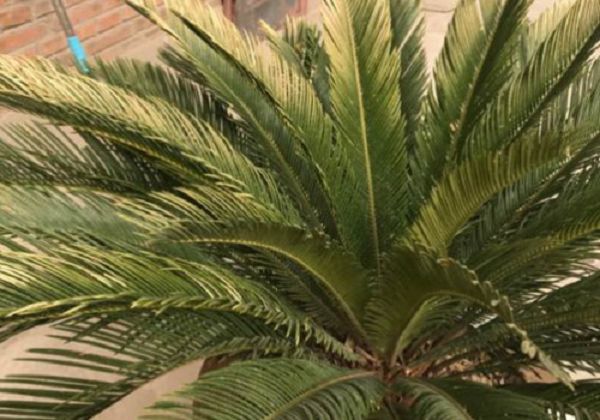
The sago palm (Cycas revoluta) is an evergreen plant with good landscaping and beautifying effects and high ornamental value. It usually has a thick trunk, and around the upper part of the trunk are distributed large feather-like fronds, and on each frond are regularly arranged hard, slender needle-like leaflets. Precisely because the sago palm's leaves are evergreen and strikingly distinctive, it is very suitable for foliage viewing. Therefore, we generally grow it as a foliage potted plant.
The sago palm has extremely strong vitality and is very easy to keep alive, but its lifespan is extremely long while its growth is very slow. Fortunately, however, it has 1-2 chances a year to sprout and grow new leaves, so if cared for and managed properly, we can enjoy green leaves of high ornamental value all year round. But sometimes we may also encounter the situation where the leaf tips of the sago palm turn yellow.
There are quite a few reasons why flowering plants develop yellow leaves, and the same is true for the sago palm. But no matter what, for an evergreen foliage plant like the sago palm, once the leaves have a problem, it will inevitably reduce the ornamental value of the potted plant. So we need to promptly investigate the cause, find the crux of the problem, and only then can we prescribe the right remedy and provide rescue.
When the leaves of the sago palm turn yellow, the cause may be quite different depending on the location and manifestation of the yellowing. If it is the leaf tips that turn yellow, it is usually caused by the plant being exposed to scorching sun or excessive light intensity. Although the sago palm relatively likes light and warmth, if it is exposed to the scorching sun in summer, its leaf margins and leaf tips are often easily burned and turn yellow. So at this time we should promptly provide it with shading treatment; in summer, generally we only need to provide sufficient scattered light.
Of course, after all, the sago palm is a sun-loving plant, and sufficient light is crucial for its growth: it can avoid leggy growth, enhance photosynthesis, and also promote the sprouting and growth of new leaves. But because the light intensity in summer is too great, we often need to take timely shading measures. However, in the three seasons of spring, autumn and winter, we should let it get more sun, so that the plant can grow better and be more ornamental.