How to grow cineraria so it bursts into a full pot? A detailed guide to care methods
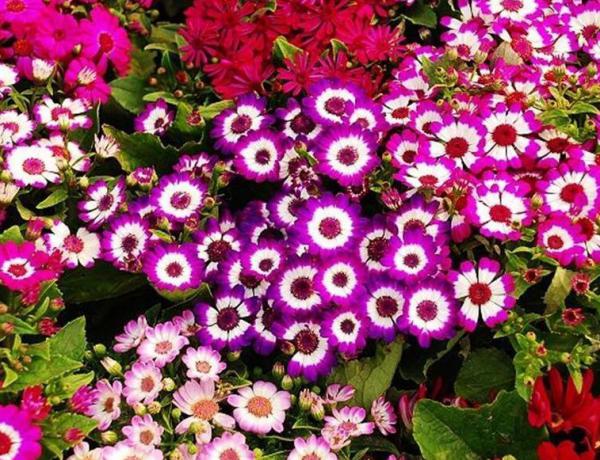
Cineraria, also known as florist's cineraria, has the flower language of "lasting joy," "excitement," "happiness," and "enduring radiance." Cineraria likes a warm, humid environment with plenty of sunlight. The suitable growing temperature is 5-20°C; the daytime temperature should not exceed 20°C, and 10°C favors flower bud differentiation.
When choosing cineraria, try to pick ones that are dwarf, compact overall, and round in shape. The leaves should be thick, the plant full, the flowers uniform in size, and the petals intact.
On soil mix: potted plants do best in fertile, loose soil with good drainage; a mix of garden soil, leaf mold, and sand works well.
Placement of cineraria also matters. It is suitable for accenting a bedroom windowsill, balcony, or living room, and the blue cineraria in particular has a uniquely mysterious beauty. For cineraria with buds about to open, place it in a spot with plenty of sunlight. For flowering ones, a bright indoor spot with a not-too-high room temperature is suitable.
On watering: In spring, keep the potting soil moist. In summer, keep the room temperature below 20°C, and be sure to shade the plant during strong, direct sunlight. In autumn, keep the potting soil moist, maintain the indoor temperature at 10-15°C, and water twice a week.
Winter is the peak flowering season; place the plant in a warm, sunny spot and keep the potting soil moist. If you are in the north, take care to keep the plant warm.
On fertilizing: Fertilize once every half month, and after flower buds appear, add 1-2 applications of phosphorus-potassium fertilizer. When the flowering period is nearing its end, stop fertilizing. Remember, excessive nitrogen fertilizer is a no-no.
Many people ask, why do my cineraria's leaves grow larger and thinner? Generally, when the room temperature is too high, the plant will grow leggy, the flower stems will be loose, the internodes will stretch, the leaves will be large and thin, and the flowering period will be noticeably shortened. When the room temperature is too low, both the leaves and flower buds will suffer cold damage. So, room temperature must be strictly controlled for cineraria; generally 10-15°C is the most suitable.