What are the winter care methods for Dendrobium officinale?
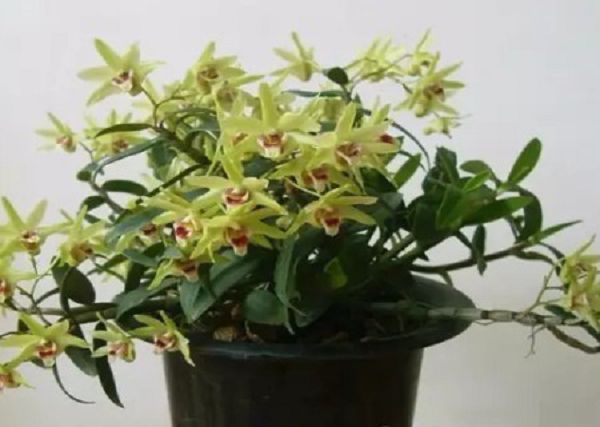
Dendrobium officinale is not only a precious medicinal herb, but also, because of its strong air-purifying ability, is often grown by many people as a potted plant, and it is also quite ornamental. But now that winter has arrived, will a potted Dendrobium officinale placed outdoors be frostbitten or frozen to death?
In fact, the cultivation of potted Dendrobium officinale is mostly limited by temperature, especially in winter, when the growing environment temperature must not be lower than 10°C; if it falls below 5°C, growth will stop. If grown in pots at home, when the cold winter comes, it should be promptly placed indoors for care.
In addition, to grow potted Dendrobium officinale well in a winter environment, you also need to master the following techniques:
1. As a potted Dendrobium officinale, in winter indoors, besides creating a suitable warm environment for it, you also need to create good humidity and ventilation conditions.
2. For daily watering management indoors in winter, generally appropriate spraying in the morning and evening is enough. On the one hand, it can increase humidity; on the other hand, it can also keep the leaf surface clean.
3. To keep the plant in good condition, we also need to appropriately increase nutrients for it. It is recommended to spray the plant with a diluted mixture of monopotassium phosphate and urea once a month to supplement nutrients.
4. In a winter environment, Dendrobium officinale is relatively rarely affected by pests and diseases, but prevention is still needed. The main thing is to prevent fungal diseases; usually, spray the stems and leaves of Dendrobium officinale once every 2 weeks with a diluted mancozeb solution.
But in winter, the main thing is still to ensure that it can overwinter safely and smoothly, and temperature is the biggest obstacle. Therefore, our focus should still be mainly on keeping it warm and protecting it from the cold, and on this basis, improve humidity, ventilation, watering, fertilizing, pest and disease prevention, and other aspects of the work.