How to grow snake plants well? Let me teach you a little trick
In most people's impression, usually only elderly people keep some flowers and plants at home. In fact, nowadays it is not only elderly people, but also many plant lovers of different ages who have joined the ranks of growing flowers. And growing flowers is not only for viewing, but can also reflect a person's love for life.
In daily life, there are many flowering plants that can be grown as household potted plants, and the snake plant (Sansevieria) is one of the typical representative plants among them. Because the snake plant not only has broad, thick, upright and sturdy leaves, but the leaves are also covered with markings, looking like a tiger's tail from a distance, which is how it got its name.
Although quite a few plant lovers like growing snake plants, if you want to grow them well, you also need to master some techniques. The reason many plant lovers fail to grow potted snake plants well is mainly a lack of care and management methods. Today, the editor will recommend a little trick for everyone, and I guarantee that after learning it you will be able to grow potted snake plants well.
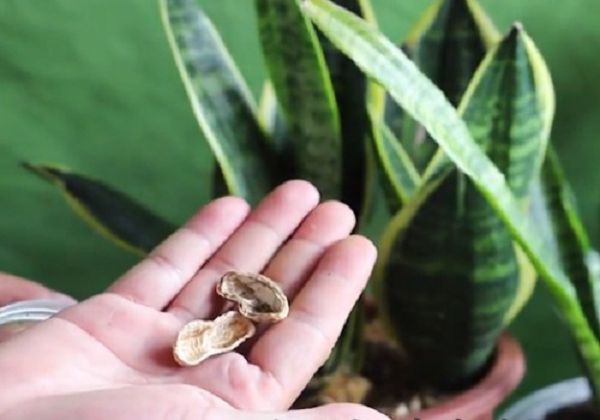
If you want to grow snake plants well, the potting soil is very key. Many plant lovers only know that snake plants like a fertile, loose, breathable and well-draining soil environment, but often do not know how to create this kind of environment. If you do not know how to do it, then the editor recommends putting some peanut shells into the potting soil. But note that they should be raw peanut shells, not boiled salted peanut shells.
Because peanut shells are rich in nitrogen, phosphorus, potassium and many other nutrients needed for the growth of snake plants, when potting, mixing some peanut shells into the potting soil to grow snake plants can supplement quite a lot of nutrients for the potting soil. At the same time, after mixing peanut shells into the potting soil, once the peanut shells decompose and break down, they can not only provide abundant nutrients for the plant, but also help increase the looseness of the potting soil and improve the soil quality.
However, generally because peanut shells fermenting in the potting soil release a large amount of heat, it is very easy to burn the roots of the snake plant. Therefore, the editor does not recommend mixing them directly with the entire soil when potting. A more scientific method is, after completing potting, to dig a groove along the inner wall of the flower pot away from the plant, then evenly scatter the peanut shells in a ring, and then backfill the soil.
Of course, we can also use peanut shells that have already been fermented and decomposed. In this case, they can be mixed evenly with the potting soil when potting. Because decomposed peanut shells generally will not release a large amount of heat after use, they will not burn the plant's roots. But if you use already decomposed peanut shells, more or less some nutrients will often be lost. Therefore, everyone should choose the appropriate method according to their needs.