How Does Dendrobium officinale Survive the Winter? Detailed Care Methods
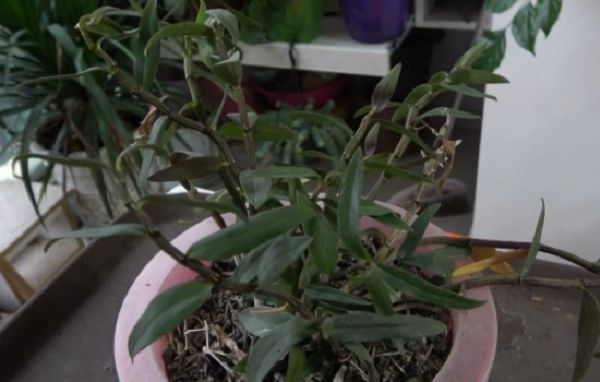
After autumn arrives, as the weather gradually turns cooler, Dendrobium officinale also begins to enter a semi-dormant state, and its growth begins to slow down. Therefore, starting from autumn, its demand for water and nutrients gradually decreases. And after winter arrives, its growth rate becomes even slower, almost in a state of stagnant growth, because winter temperatures are too low, and it is basically in a fully dormant state.
Dendrobium officinale is a plant that prefers warmth and cannot tolerate cold, so in winter it basically goes dormant and stops growing. During this period, whether it is the consumption of nutrients or water, it is usually very little. Therefore, we need to strictly control water and fertilizer, and usually starting from autumn we need to reduce the frequency of watering, and when winter comes, we should stop fertilizing in time. And in winter, Dendrobium officinale also looks rather poor, as if it is about to die.
Although in winter many of its leaves still hang on the branches and remain green, at this time no matter how we water and fertilize, we can hardly see any sign of growth, and it looks as if it is not reacting at all. Water and fertilizer also cannot stimulate its growth, which is clearly a characteristic of hibernation. Generally, we only need to place the potted plant in a place with scattered light and smooth air circulation.
Particular attention should be paid to controlling watering, because Dendrobium officinale has relatively poor cold resistance. A large amount of watering not only cannot be consumed, but instead will reduce the plant's ability to resist the cold, thereby making it more susceptible to freezing. On the contrary, in winter, keeping the growing medium relatively dry can make it more cold-resistant, which is more conducive to its overwintering.
But the most important thing in winter is still to promptly take cold-proof and warmth-keeping measures. After all, this rare plant Dendrobium officinale has poor cold resistance and cannot be allowed to freeze, otherwise it will bring us relatively serious losses. To be safe, generally in winter, promptly move it indoors to a warm place for care, and keep the ambient temperature above 10°C, preferably around 15°C. If cared for this way in winter, it is fully capable of successfully overwintering.