How to prevent fruit drop in Japanese persimmon (Diospyros cathayensis)? A detailed guide to practical methods
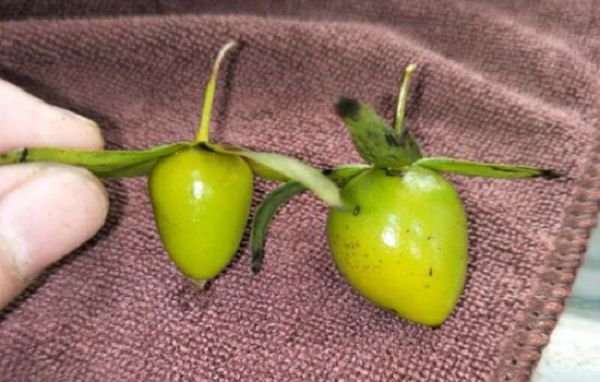
Fruit-bearing bonsai is a fairly common form in the bonsai world, and since it is meant to be enjoyed for its fruit, the priority is naturally to enhance the ornamental value of the fruit. If fruit drop occurs, there will inevitably be no fruit to admire, or the number of fruits will be too small, reducing the bonsai's ornamental value. The same is true for the Japanese persimmon (Diospyros cathayensis), since it is mostly used to make fruit-bearing bonsai.
The distinctive features of Japanese persimmon bonsai are its round fruit, vivid fruit color and long fruiting period, along with small, sparse leaves, yet it has strong sprouting ability and fairly abundant branch distribution. But since it is appreciated as a fruit-bearing bonsai, ultimately the fruit quality still has to be improved to enhance the bonsai's ornamental value. And preventing fruit drop is the top priority, so how is it done?
Japanese persimmon is a small deciduous tree, and in autumn and winter it very easily drops its leaves naturally. If abnormal fruit drop occurs, it greatly affects the appearance. So we should do our best with care and management to avoid abnormal fruit drop, mainly by managing the following aspects:
1. Ensuring nutrients
If we want the Japanese persimmon to set fruit smoothly and keep the fruit hanging on the tree for a long time, starting each year in July we should apply additional high-phosphorus and high-potassium fertilizer. This topdressing process needs to continue until October in autumn, so the plant can obtain sufficient nutrients to promote fruit growth and also help prevent fruit drop.
2. Controlling nitrogen fertilizer
During the flowering and fruiting period, topdressing should mainly be phosphorus and potassium fertilizer, since these two nutrients play an important role in promoting flowering and fruiting and also help stabilize fruit set. If instead we focus on applying nitrogen fertilizer at this time, the plant will run rampant with leaves and branches, so the flowers and fruit cannot get the corresponding nutrients to promote flowering and fruiting. And even the fruit that does set will drop due to a lack of phosphorus and potassium. So during the flowering and fruiting period, nitrogen fertilizer should be controlled, or even nitrogen intake stopped entirely.
3. Proper water control
During the flowering period and the early fruiting stage, the Japanese persimmon must have its water properly controlled. Because too much watering and excessively sufficient moisture easily cause heavy flower and fruit drop. Therefore, during the flowering and fruiting period we should keep the potting soil only slightly moist, and absolutely avoid frequent watering. Moreover, frequent watering not only easily causes flowers and fruit to drop, but may also cause root rot, bringing even greater harm to the plant.
4. Thinning flowers and fruit
A Japanese persimmon in its flowering and fruiting stage consumes a large amount of nutrients, but at the same time it cannot be given heavy topdressing, so if there are too many flowers and fruit, we need to thin them promptly. Because too many flowers and fruit create fierce nutrient competition, and those flowers and fruit that win relatively less nutrition often drop due to poor growth. Therefore, properly thinning flowers and fruit can reduce nutrient competition, thereby reducing abnormal fruit drop.
The above aspects are only the common causes of abnormal fruit drop in Japanese persimmon bonsai; there are actually many specific causes. For example, insufficient plant maturity, weak roots, insufficient nutrients, too much nitrogen fertilizer during the flowering period, unpollinated varieties that need pollination, too much watering during the flowering and fruiting period or continuous rainy weather, strong wind during the flowering and fruiting period, and attacks by pests and diseases, all of these are triggers. So, to avoid abnormal fruit drop in Japanese persimmon bonsai, we must focus on managing these aspects in our routine care.