Can Clivia survive the winter at minus 5 degrees?
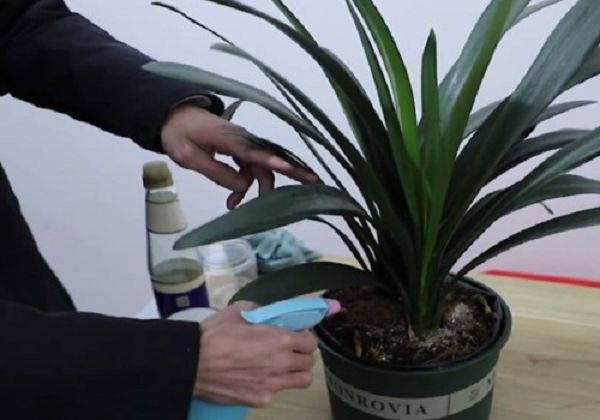
Clivia has not only broad, oily-green leaves but also large, brilliantly colored blooms, making it a very suitable ornamental flowering plant for growing as a houseplant. But like the snake plant (Sansevieria), it prefers warmth and cannot tolerate cold, so you must take cold-protection and warmth measures in advance for the coming winter.
In many ways, Clivia's habits are similar to those of the snake plant, especially in its temperature requirements, which are very close. In southern China, it generally overwinters fairly easily; but in southern China, overwintering is often more difficult.
This mainly applies to growing Clivia in northern China, because it is in northern China that low temperatures of minus 5°C are more likely to occur. In southern China, temperatures are generally much higher than in the north, especially in winter. In southern China, even outdoor temperatures rarely drop below 0°C.
The most suitable temperature for Clivia's growth and flowering is between 15°C and 20°C, while the germination temperature for seed propagation can be kept between 18°C and 35°C. But like the snake plant, when the ambient temperature falls below 10°C, the plant's growth becomes very slow; below 5°C, its growth and development are stunted; and below 0°C, the plant will suffer frost damage. And below minus 5°C, Clivia cannot survive the winter.
Because Clivia's root system is made up of fleshy roots, it is drought-tolerant but not water-tolerant, and it is also rather afraid of low temperatures and frost damage. So when winter comes and the temperature drops relatively low, you should promptly move it indoors to a warm, bright place for care, ensuring the plant can safely and smoothly get through the winter. But to improve the plant's cold resistance, it is recommended to apply a little fertilizer in advance to build it up, and to pay attention to controlling water in winter.