Is Leptospermum scoparium easy to grow? Teach you the correct care methods
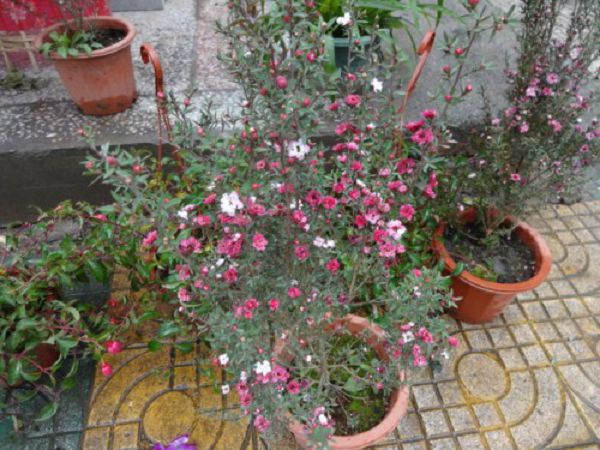
Leptospermum scoparium is one of the newly introduced flower varieties in recent years. It gets its name because its leaves resemble pine needles and its flowers resemble red plum blossoms, and because its double-petaled flowers look like peonies, it is also called pine-leaf peony. Although the flowers of Leptospermum scoparium are not large, they bloom profusely; when in full bloom, the whole tree is dotted with small flowers, bright and charming, giving a feeling of abundant blossoms. The peak blooming period of Leptospermum scoparium falls right between New Year's Day and the Spring Festival, so it can be displayed indoors as a New Year floral decoration, adding a festive and joyful atmosphere to the holiday. Besides being grown in pots, Leptospermum scoparium can also be used as a garden shrub or as cut flower material.
Now more and more flower lovers are captivated by Leptospermum scoparium. Its flowers are very beautiful, semi-double. Let us learn about the cultivation methods for Leptospermum scoparium. Leptospermum scoparium prefers a cool and humid, sunny environment, and dislikes hot and humid climates, making it relatively difficult to care for.
1. The suitable growing temperature for Leptospermum scoparium is 18°C-25°C. In winter, it needs to be kept above -1°C. In summer, it fears high temperatures and scorching sun, so it should be given sufficient light in other seasons. In areas with hot summers and cold winters, some protective measures need to be taken, such as placing it in a shade shed, under tree shade, or in another cool and ventilated place in summer, and sprinkling water to lower the temperature. In winter, it can be covered with grass for insulation or planted on the south side of a building for microclimate protection. In the north, it is grown indoors in pots in winter.
2. Leptospermum scoparium has strong drought tolerance (but according to feedback from flower lovers, when potted, it immediately sulks if too dry, so you can consider keeping it appropriately on the moist side). It is not strict about soil, but the best is slightly acidic soil rich in humus, loose and fertile, and well-drained. It dislikes high temperature and excessive moisture, and especially must guard against poor drainage and long-term waterlogging.
3. Leptospermum scoparium usually grows about 2 m tall, with slender branches. If pruning and management are not timely, it tends to grow wildly and its plant shape becomes loose. However, it tolerates pruning well and has strong branching ability. This characteristic can be used to start pruning from a young plant, causing it to continuously sprout new branches and controlling a reasonable plant shape. After 1-2 years, it can be shaped into a beautiful form, while also producing abundant flowers with dense branches and profuse blooms.
4. During shaping and pruning, two points need attention. First, except for some branches that affect the plant shape and can be thinned out, the other branches should not all be cut off; generally leave 1/3-1/2. If pruned too heavily, leaving only already lignified branches, it will be difficult for the plant to recover growth. Second, fertilize immediately after each pruning, mainly with phosphorus and potassium fertilizers, and control the amount of nitrogen fertilizer to promote flower bud differentiation and ensure flowering the next year.
In different seasons, the care methods for plants are also different. Only by adopting the correct care methods in each season can the plant grow vigorously. Below, let us explain the four-season care methods for Leptospermum scoparium.
[Spring care]
1. Leptospermum scoparium likes a cool and humid, sunny environment. In spring, it should be given sufficient light and placed where it can receive scattered sunlight, while avoiding direct sunlight as much as possible.
2. After the flowering period of Leptospermum scoparium ends in spring, a careful pruning should be carried out to achieve the goals of lowering the crown, maintaining a beautiful tree shape, and also encouraging the plant to sprout new flowering branches.
[Summer care]
1. In summer, Leptospermum scoparium fears high temperatures and scorching sun, so it needs to be placed in a shade shed, under tree shade, or another cool and ventilated place for care.
2. In summer, increase the frequency of watering. You can also frequently spray water mist around the plant to increase relative air humidity. However, during the rainy season, pay attention to timely drainage to avoid root rot caused by soil waterlogging.
[Autumn care]
1. Autumn is the growing season for Leptospermum scoparium. Apply a diluted, fully decomposed liquid fertilizer once every 1 to 2 months.
2. In autumn, Leptospermum scoparium can be propagated by methods such as cuttings, air layering, or sowing.
3. The suitable temperature for both seed germination and branch rooting is around 20°C, so it is suitable for propagation in cool mountainous areas, while the survival rate is relatively low in hot and humid areas.
[Winter care]
1. In winter, control moisture and keep the soil slightly moist and somewhat dry, to prevent frost damage to Leptospermum scoparium. If the temperature is too low, watering can be stopped.
2. The suitable growing temperature for Leptospermum scoparium is 18°C-25°C, and in winter it needs to be kept above -1°C. Therefore, in the north it can only be grown in pots for ornamental purposes, while in the milder southern regions it can be used for courtyard landscaping.
3. In winter in the north, Leptospermum scoparium can be grown in a greenhouse. In other areas, it can be covered with grass for insulation or planted on the south side of a building for microclimate protection.