Is the kalanchoe (Christmas kalanchoe) poisonous, and can it be placed in the bedroom?
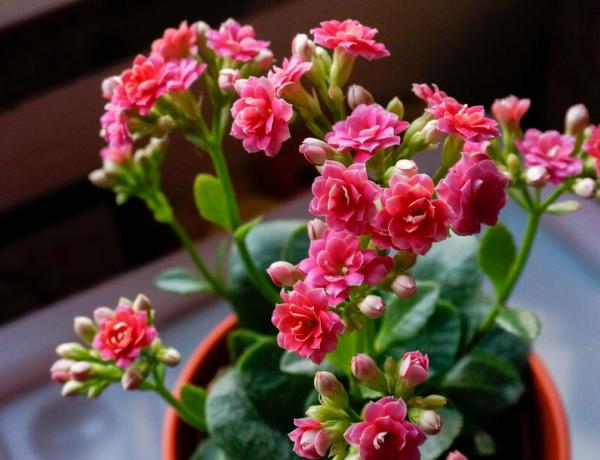
Growing flowers and plants indoors is now a very good choice, and the kalanchoe is one of them. Combined with its beautiful symbolic meaning, it has become popular with everyone, but some people worry about whether the kalanchoe is poisonous and whether it can be placed in the bedroom. The editor will answer these questions for you.
1. Is the kalanchoe poisonous?
The kalanchoe is non-toxic, and placing a few pots of it in a newly renovated house can even absorb harmful gases. The theory that flowers and plants are poisonous is very popular now; almost the vast majority of flowers and plants get a "is it poisonous" search on Baidu, followed by a large number of claims like a certain flower causes cancer, a certain grass absorbs formaldehyde, and a certain tree prevents cancer.
Traditional Chinese medicine comes from plants, and it is also said in traditional Chinese medicine that every medicine has some toxicity. Facing all kinds of flowers and plants, some are indeed poisonous, such as the widely recognized dumb cane (Dieffenbachia) and crown of thorns (Euphorbia milii), but these toxicities are also passive. In other words, if you do not eat them and do not intentionally touch the toxic parts, there will be no problem.
So if flower lovers are afraid that keeping flowers and plants at home will cause poisoning, they are worrying too much. In addition, it should be said here that no matter what kind of flowers and plants they are, they should not be kept in excessive numbers indoors, especially in the bedroom. But if there is a child at home with particularly strong hands-on ability who likes to dig into flowers and plants, it is fine to appropriately avoid poisonous flowers and plants, but the kalanchoe is no problem.
2. Care of the kalanchoe?
The kalanchoe likes warmth, and the suitable growth temperature is 20°C to 28°C. During the day it should not exceed 30°C, and at night it should not be lower than 18°C. Too high or too low a temperature will stop its normal growth. After the winter temperature drops below 8°C, the leaves turn red and the flowering period is delayed. It grows well in full sun or under 60% to 70% diffused light. In hot summer, shade it appropriately, but insufficient light easily makes the plant grow leggy, with slender branches and thin, small leaves.
Insufficient light in late autumn affects flower bud differentiation and reduces the number of flowers. The kalanchoe is a succulent and does not like too much water. It is best to water before noon, and the leaves must remain dry before nightfall. The water quality requirement is an EC value higher than 0.75, a pH value of about 6.5, and a salt content of no more than 140 ppm. Now everyone should be clear about it.