Orchid Propagation Methods and Care Precautions Explained in Detail
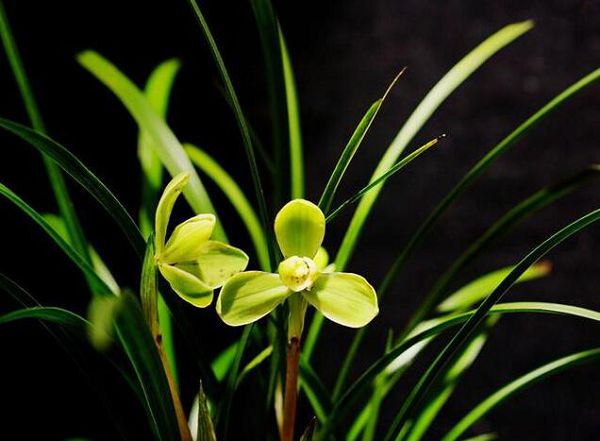
Orchids prefer warm, humid and semi-shaded environments. The optimal growing temperature is 18-25°C, and the most suitable relative air humidity is 80%-90%. They like scattered weak light and dislike direct sunlight. Slightly acidic or neutral soil is ideal. They dislike heat, dryness and waterlogging. Enough talk, let's get straight to the point, "how to grow orchids":
Orchid Propagation Methods
Orchid propagation has two methods: vegetative propagation and sexual propagation. Vegetative propagation includes division and tissue culture, while sexual propagation refers to sowing seeds. For ordinary home growing, the division method is generally used, usually dividing once every two to three years, and it should be done in spring and autumn.
After division, each clump should retain at least 5 connected pseudobulbs, and these pseudobulbs should have at least 3 robustly growing leaves; otherwise, do not rush to divide.
Before division, reduce watering to make the potting soil relatively dry. When taking the plant out of the pot, remove the soil around the roots, wash clean with clear water, cut off dead leaves and rotten roots and leaves, and let it dry for two to three hours. After the roots turn white and wilt, use a knife to cut and divide between the pseudobulbs, and apply plant ash or sulfur powder to the cuts for antisepsis.
Precautions for Growing Orchids:
(1) Dry/wet and cold/hot conditions determine whether to water more or less. In late spring and early summer when the climate is dry, water more; after autumn when the climate is dry, water more; in rainy summer and rainy autumn, water less; in the cold late autumn and winter, and early spring, water less. On days with strong hot winds, water more; on days with frequent damp winds, water less.
(2) When the orchid pot is on the dry side and the watering interval is prolonged, the leaf tips of orchid leaves often become scorched and withered. This phenomenon is also a kind of signal that watering is needed, but by then it is already too late, because the orchid leaves have been damaged by thirst for water, and this damage cannot be cured.
There are generally 3 ways to water orchids. The first is soak watering. That is, soak three-quarters of the orchid pot in water, and after the pot is thoroughly wet, drain off the excess water. The second is pour watering. That is, pour water directly into the potting soil until the center of the potting soil is wet. This method pours at the top and flows out at the bottom, and it must be repeated many times to achieve thorough watering. The third is spray watering. That is, use a coarse-droplet spray head to spray water, wetting the entire orchid-growing environment, letting water seep from the soil surface to the upper part of the orchid roots to moisten the orchid pot. Expert orchid growers often use these three watering methods in combination according to different pots, with ideal results.
(3) Orchids like sunlight but dislike strong sunlight. According to this habit of orchids, home-grown orchids need shading. The amount of shading can reach 70%, that is, 70% of sunlight is blocked, and overall receiving 30% sunlight is sufficient.
To shade orchids, the commonly used methods are as follows:
First, bamboo strip blind shading. Bamboo strip blinds have square, round and strip-shaped openings. As sunlight moves, the shadows also move. Orchid leaves are exposed to light at one moment and not at another, as if growing in a jungle. Moreover, the bamboo blind is woven from bamboo, does not absorb heat, and keeps the environment cool and shaded.
Second, bamboo curtain shading. Bamboo curtains are dense and solid. When sunlight is needed, roll them up for light; when sunlight is too strong, lower them to block light. The amount of light received can be adjusted immediately by hand. The westward sun is the strongest of the day. If orchids are planted facing west, using bamboo curtain shading in the afternoon gives the best effect.
Third, shade net shading. Shade nets are woven from plastic filaments, with light openings arranged in a balanced density. When sunlight passes through the net, light spots shine down dimly and flicker on the orchid leaf surfaces, and the light intensity is moderate. If the light is too strong, a double-layer net can be pulled over, making it easy to adjust.
Fourth, plastic board shading. Plastic boards are industrial boards used in construction. This kind of board does not let sunlight pass through directly, but reflects the brightness of sunlight onto the orchids, making it extremely ideal for the top layer of an orchid shed. The boards come in many colors; for orchid shading, light yellow and white are suitable choices. The drawback is that they absorb heat and do not allow air through.
Fifth, wire mesh shading. Choose the mesh size according to the required light intensity. Wire mesh shading is precise, reliable and ventilated on all sides. Problem: the cost of building the mesh is high, and a steel frame must be set up before the mesh can be stretched.
Sixth, movable shading. Orchid growers who do not grow many orchids and only keep a few pots or a dozen pots can learn the direction of sunlight and the intensity of exposure on different parts within a day and within a year in the orchid-growing environment, and move the orchid pots at set times and regular intervals to avoid periods of strong light, thereby achieving the effect of shading the orchids. This is a convenient shading method suitable for most home orchid growing, requiring only labor, not investment.
(4) Although orchids are flowering plants that like sunlight, this does not mean they do not need light. If they are kept growing in shady places for a long time, the accumulation of organic matter is limited and cannot meet the needs of reproductive growth, thus affecting flower bud differentiation, and naturally there will be no flowers or very few flowers the following year.