Causes and Solutions for Yellowing Leaves of Money Tree After the Start of Spring
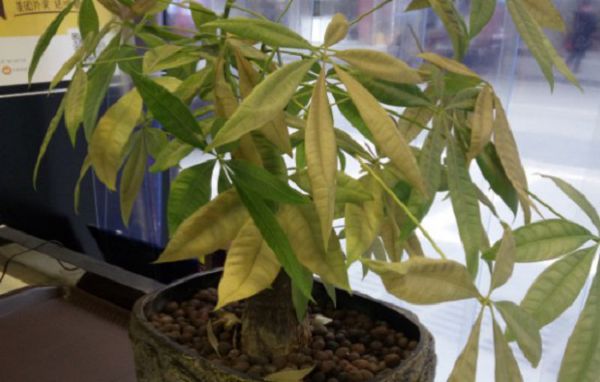
The money tree (Pachira aquatica) is not only evergreen year-round but also highly ornamental, carrying the auspicious meaning of bringing in and attracting wealth, so it is often grown as a household potted plant. However, the money tree has relatively high requirements for its growing environment and is prone to yellowing leaves. Just after the Start of Spring, some growers noticed that the once emerald-green leaves of their money trees at home began to turn yellow. What is going on?
Under normal circumstances, yellow leaves do not appear even during the harsh climates of summer and winter, so when they do appear, it indicates a problem with the plant's growth. Yellowing leaves on a money tree not only affect its ornamental value but also serve as a signal released by the plant indicating poor growth.
As the Start of Spring gradually passes and the weather becomes warmer, this is a good thing for the money tree. It visibly becomes more vigorous in growth, with buds beginning to sprout and new leaves beginning to grow. This is not only because spring is a season of germination but also because the money tree prefers warmth and cannot tolerate cold, and it begins to grow once temperatures reach a certain level.
When a money tree shows yellowing leaves in spring, we can use the process of elimination to find the cause and then promptly adjust our care measures. As long as it is handled in time and with the right methods, it will quickly return to its normal emerald-green state. The main reasons for yellowing leaves on a money tree in spring are primarily due to the effects of temperature and water and fertilizer.
Although the Start of Spring has arrived, temperatures can still be unstable at times, and a late spring cold snap may even occur. Since the money tree is not cold-tolerant and is very afraid of the cold, its leaves may turn yellow after being frosted. If the leaves do not show severe cold damage, generally it is only necessary to take timely measures to keep it warm. But if the cold damage is severe, then the yellow leaves need to be cut off, and then the plant should be placed in a suitable environment to let it re-sprout and grow new leaves.
In addition to temperature, it may also be caused by overwatering. Because the money tree is very sensitive to watering, although it grows faster after entering spring and consumes more water, requiring timely watering. But after all, it is not tolerant of waterlogging, and if too much watering causes root rot, it can easily damage the root system, leading to yellowing or leaf drop. Therefore, we need to promptly trim the roots and repot.
Of course, the money tree will sprout rapidly in spring and accelerate its growth, and its rapid growth will inevitably accelerate nutrient consumption, especially the sprouting of branches and leaves, which requires consuming many nutrients. If nutrients are insufficient, not only will its growth be weak and prone to nutrient deficiency, but its leaves will also become thin and yellow. Therefore, at this time we also need to strengthen fertilization to ensure sufficient nutrients to meet the needs of its rapid growth.
In spring, the light intensity is not strong, so yellow leaves are generally not caused by too much light; on the contrary, yellow leaves may be caused by a lack of light, and we only need to place it in an environment with sufficient light for care. At the same time, yellow leaves will not be caused by a lack of water, because in spring the air humidity is [high], and the money tree is relatively drought-tolerant, so not watering it for a short while will not cause yellow leaves. Also, yellow leaves generally will not appear due to too much fertilization, because in spring it consumes nutrients quickly and in large amounts, as long as it is not excessive and does not cause root burn.