How to prune a rubber plant? Teaching you the correct pruning method
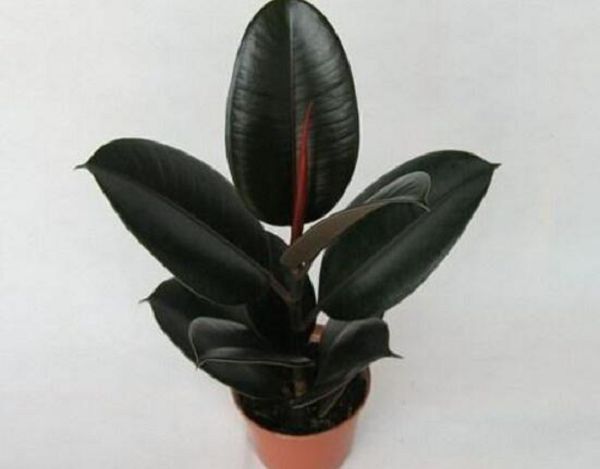
Rubber plants grow especially fast. If you do not pay attention to shaping the rubber plant during ordinary care, its ornamental value will be greatly reduced. So the rubber plant needs to be pruned appropriately. Some flower growers do not know where to start; especially for beginners, pruning a rubber plant is indeed not an easy task. How do you prune a rubber plant? Below we will talk about rubber plant pruning methods.
I. Rubber plant branch-promoting pruning methods
1. Pinching
The first rubber plant pruning method is pinching. That is, remove the terminal bud of a rubber plant branch or cut off the tip of the branch to promote sprouting of side branches. The pruning method is: when the rubber plant grows to 30-50 cm, cut off the leaves and young buds at the top. Usually the 2~3 side buds near the top sprout very easily. After the side branches grow out, the tree shape becomes cup-shaped or Y-shaped, so the pinching method is still quite easy.
2. Heading back
The heading-back pruning method is to cut off one third or one half of the upper part of the entire main branch to promote sprouting of side branches on the trunk. Heading back is a large pruning cut. Within one year after pruning, the plant has very few branches and leaves and poor ornamental value, but as time goes on, the side branches sprout, and after later pruning the shape will be very beautiful.
3. Notching
Notching refers to making cuts on the bare parts of the main branch to prompt the buds below the cut to sprout and form side branches; this method is called notching. It is generally better in mid-April and can form side branches with 3~4 leaves. At 0.5~1 cm above the bud to be promoted, use a knife to make 1~2 horizontal wounds parallel to the internode. The wound depth only needs to cut the epidermis to the xylem, and the wound length is 1/2 of the stem circumference. The distance between the two wounds is about 0.2 cm. After one month, the buds below the wounds begin to sprout. By autumn, they can grow into side branches with 3~4 leaves.
II. Rubber plant trunk pruning methods
1. Bud removal
Remove buds that have just begun to sprout, to inhibit side branch growth. The main principle is to eliminate side bud sprouting, so that nutrients are supplied in a concentrated way to the growth of the main branch.
2. Thinning
Thin out overly dense branches. Use scissors to cut the branches off from the base. If bud removal is not done in time, use the thinning method.
III. Rubber plant pruning season
For rubber plant pruning, the main thing is to control side branches in summer and prune branches in winter. That is, in summer, strongly vigorous branches are heavily controlled, controlling the strong and keeping the weak, adjusting the tree vigor evenly, and mastering the principles of pinching the tips of strong side branches, heavily pruning strong branches, lightly pruning weak branches, and keeping more small branches, so as to achieve the pruning goal of highlighting the main trunk and promoting faster tree growth. In winter, heavily prune strong branches and lightly prune weak branches, with the focus on removing upright, strong competing branches from the base.
Conclusion: The above are rubber plant pruning methods. Everyone has some understanding now, right! In fact, the key pruning points are not that difficult. I believe that in the future, when you encounter the question of how to prune a rubber plant, you will no longer be troubled, and you can solve it fairly easily, making the rubber plant grow more beautiful.