Causes and Solutions for Drooping Snake Plant Leaves
Autumn has now arrived, and as the weather gradually turns cooler, sometimes you can even feel gusts of cold air, and many plant enthusiasts have already put on thicker clothes. For snake plants, preparations for overwintering also need to be made next. This is because snake plants themselves have relatively poor cold tolerance, and if they are exposed to freezing, it can easily affect their normal growth.
The snake plant is a succulent plant native to tropical regions, so it is not cold-tolerant. Moreover, as the weather turns cooler, many plant enthusiasts have noticed that their potted snake plants are growing less vigorously, and some have even developed drooping or even wilting leaves.
Snake plants like a warm growing environment and grow best in conditions of around 20-plus degrees. When the weather turns cold, especially when the ambient temperature drops below 10°c, their growth rate slows down noticeably; when the ambient temperature drops below 5°c, they will suffer cold damage.
Many flowering plants, when exposed to freezing, tend to show a state of drooping leaves, and the same is true for snake plants. When the ambient temperature drops below 5°c and the plant suffers cold damage, its leaves will also droop, looking not attractive at all. So as winter approaches, you must promptly take cold-proof and warmth-keeping measures for it to avoid cold damage.
Of course, to ensure the plant can overwinter safely and smoothly, before winter arrives you also need to apply some fertilizer to supplement nutrients and help it grow stronger. Only in this way can its cold resistance and cold protection ability be improved, thereby avoiding the situation where leaves droop due to cold damage. In this season, we need to gradually supplement it with some nutrients.
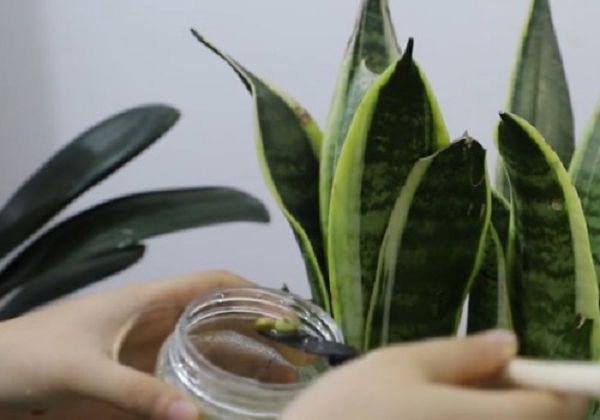
But when fertilizing snake plants, we do not need to go to the flower market to buy special fertilizer; usually we can make flower fertilizer at home. We can take some soybeans, either bury them some distance away from the plant's root system so they ferment and decompose in the pot, thereby breaking down nutrients; or first boil them, then put them into a bottle, add an appropriate amount of water, tighten the bottle cap and let them ferment.
After the soybeans have completely decomposed in the bottle, they can likewise break down rich nutrients, and then the soybeans together with the decomposed liquid can be used to fertilize the snake plant, with very good results. After the plant absorbs the large amount of nutrients from the soybeans, it will naturally grow more robust, which can not only prevent the leaves from drooping and sagging, but also improve its own cold resistance, thereby ensuring it can overwinter safely.