Cherry Blossom Bonsai Care Methods and Daily Management Tips
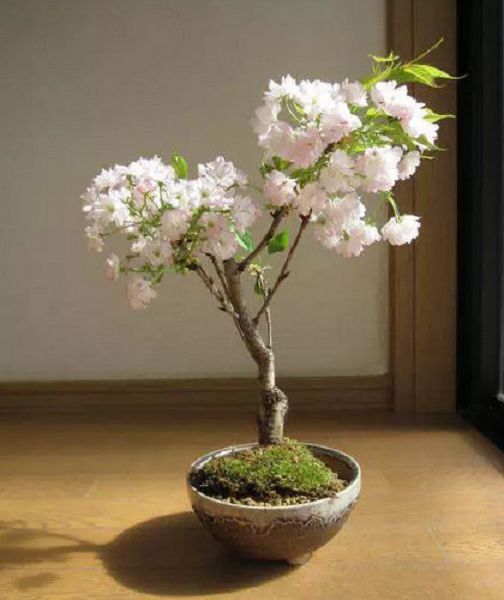
Cherry blossoms are suitable for planting in the ground and are rarely grown in pots, but they can indeed be grown in pots. Suitable varieties for potted cherry blossoms include 'Asahi', 'Mamezakura' (Fuji cherry), 'Mikuruma', 'Gyoiko', and others. Here we have collected some pictures of potted cherry blossoms for friends to enjoy, and we have also summarized the following cultivation methods for potted cherry blossoms to achieve abundant flowers and lush foliage.
1. Soil:
For potted cherry blossoms, you first need to prepare the soil. Generally, homemade leaf mold can be used. The specific method is to collect leaves along with acidic soil, chicken manure, charcoal powder, and microorganisms and compost them together. Homemade leaf mold has good drainage and aeration, making it suitable for the growth of potted cherry blossoms.
2. Watering:
Cherry blossoms dislike waterlogging. Water reasonably according to different seasons and the size of the cherry blossom seedling, following the principle of watering when dry and letting dry between waterings. The soil must not be too wet or waterlogged, otherwise it will cause root rot - in mild cases, leaves will drop and flowering will be affected; in severe cases, the entire plant will die.
3. Fertilizing:
Potted cherry blossoms need sufficient fertilizer to ensure the nutrients required for their growth and development, so that the plants have lush branches and leaves and vivid flower colors. Generally, apply decomposed liquid fertilizer once a week. In the early stage, mainly use nitrogen fertilizer to promote vegetative growth. In the later stage, pay attention to applying phosphorus fertilizer in combination to prevent excessive vegetative growth from affecting flower bud differentiation. In May and June, spray 0.1%-0.2% monopotassium phosphate on the leaves. Apply base fertilizer once each before and after flowering to lay the foundation for flowering the following year.
4. Pruning:
Pruning potted cherry blossoms requires special attention. Before and after flowering, appropriately thin out excessively dense branches, cutting away inner branches, dead branches, thin and weak branches, and diseased and pest-infested branches. Throughout the growing season, promptly remove sprouting branches and water sprouts to avoid consuming nutrients. After pruning, you must apply a preservative to prevent wounds from rotting, because cherry blossom wounds heal relatively slowly. Newly potted cherry blossom branches should be cut back to encourage more new branches and more flower bud differentiation.
5. Pest control:
Cherry blossoms suffer from gummosis and root rot. For both conditions, timely treatment is needed along with soil improvement, strengthened water and fertilizer management, and reasonable pruning. During a year of growth, cherry blossoms may be harmed by aphids, red spiders, and scale insects. Generally, spray 3-4 times: the first time before flowering, the second time after flowering, and the third time in July and August. Careful observation and timely control are necessary to achieve good results.
The care and management methods for cherry blossom bonsai are similar to those for plum blossom bonsai. We cultivate cherry blossom bonsai together with plum blossom bonsai without giving them special care, and they can bloom normally every year for people to enjoy. At present, cherry blossom bonsai still needs to be popularized, and this work requires continued exploration and development by us and our peers.