What medicine works well to prevent and control dried-up leaf tips on osmanthus
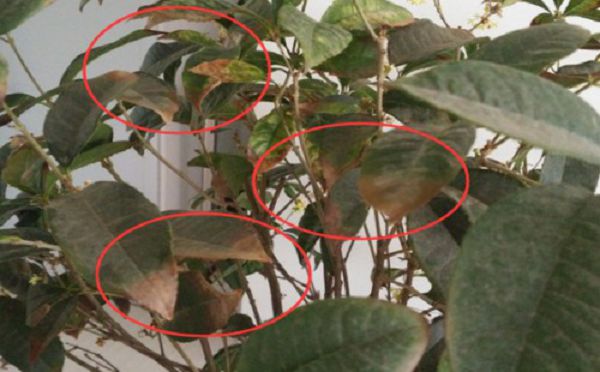
If you want a potted osmanthus to maintain good growth and ornamental effect, routine care and management work cannot be careless. But sometimes we find that although we have done well in all aspects such as light, temperature, water and fertilizer, the potted osmanthus still shows poor growth. The most prominent sign is that the leaf tips of the osmanthus tree dry up, and there is even a trend of the affected area expanding. What is going on?
In fact, although the above common care and management work has been done well enough, dried-up leaf tips can still occur. First, after ruling out the reasons of improper use of the above care methods, the remaining possibility is also the detail we most easily overlook. That is, the plant has been infected with leaf blight.
Of course, it is a special medicine for preventing and controlling leaf blight, but before spraying the medicine, we need to immediately stop watering and replenishing water, otherwise it will only worsen the condition and make the dried-up leaf tips spread even faster. Only then can we achieve the prevention and control effect through targeted medicinal intervention and bring this situation under control. The following are common prevention and control methods:
1. First, clean up the diseased branches and leaves, and be careful not to let them fall into the pot, otherwise they will continue to infect healthy branches and leaves. Then gather these pathogen-carrying branches and leaves together and burn them to eliminate future trouble.
2. Next, do a good job of care and management during the disease period to reduce or avoid continued occurrence of the disease. To ensure the soil is fertile, loose and slightly acidic, after loosening the soil, appropriately adjust the soil acidity and improve the soil quality to meet the growth needs of the osmanthus tree.
3. Mix some organic fertilizer and a small amount of phosphorus and potassium fertilizer into the potting soil as base fertilizer to increase nutrients and improve the plant's immunity. Since osmanthus is also not tolerant of heavy fertilizer or concentrated fertilizer, especially raw fertilizer, it is recommended to use thin, well-rotted organic fertilizer, and the concentration of phosphorus and potassium fertilizer should be low enough to avoid fertilizer damage.
4. Prune branches and leaves appropriately, especially those that are growing too densely, to improve ventilation and light transmission. At the same time, pay attention to controlling temperature and humidity, and avoid placing it in a hot and humid closed environment, so as to reduce the chance of infection by pests and diseases.
5. After the plant enters the growing season, the plant's growth factors are often in an active period, so it grows relatively fast, and pests and diseases are often relatively active as well. Therefore, it is recommended to use medicine to spray and kill once a week, and after several consecutive treatments, the disease will be eliminated, and the plant's leaves will gradually return to normal.
In the process of disease prevention and control, the main medicines available include Bordeaux mixture, thiophanate, carbendazim, benomyl, zineb, etc. As long as everyone mixes them with water in a certain proportion and sprays to kill, the effect is very obvious. But if you want the sterilization effect to be more prominent and achieve a complete cure, it is recommended that everyone use the above medicines alternately.