How to make a Portulacaria afra bonsai? Detailed practical tips
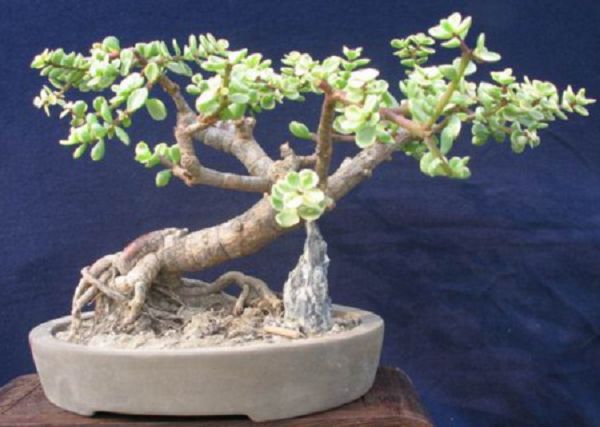
Portulacaria afra has strong adaptability to the environment; it not only loves light and tolerates drought, but is also fairly tolerant of pruning, making it very suitable for balcony pot cultivation and an excellent choice for making bonsai. A Portulacaria afra bonsai can not only be made into a landscape on its own, but can also be planted together for viewing, and both have extremely high ornamental value. However, in the process of making a Portulacaria afra bonsai, we need to have certain operating skills, and today the editor will share them with you.
Bonsai creation is a joyful thing for body and mind, and it is also a means of training thinking and improving one's own skills. For bonsai creators, this process is an enjoyable one. It is just that we need to create according to scientific and reasonable techniques.
1. Tips on material selection
Portulacaria afra generally obtains seedlings through layering, and layering is best carried out in the three seasons of spring, autumn and summer, but the effect is especially good when done in spring. However, during layering, water control management needs to be done well, because once water accumulates in the pot soil, it easily leads to rot. The layering process usually also takes 1 year.
2. Tips on making
The pot can be chosen according to the shape of the plant; the principle is that it should both benefit the plant's growth and be beautiful and elegant. Once the layered propagation has been cultivated into shape, the bonsai can be made, and it can be shaped in all four seasons. But as to whether it is suitable for making a single-trunk style or a multi-plant combined planting style bonsai, this needs to be decided according to the thickness of the plant's stem, the way it extends, the direction of the branches, and other aspects.
Among these, special attention should be paid to aesthetics in pruning and wiring. Pruning should focus on cutting off branches that look cumbersome due to redundancy, and on the retained branches, try to keep 2 leaves per node; but we also need to properly handle the distribution of the intricate and dense exposed roots, mainly the root system exposed on the surface, so that it appears more natural and reasonable. After removing the binding wire and pruning appropriately, if necessary, we can bind it again to shape it.
It is worth noting that Portulacaria afra that has undergone branch pruning and root pruning will leave quite a few wounds, so it is necessary to avoid contact between the wounds and the pot soil as much as possible, otherwise it is easy to infect with pathogens, leading to rot, affecting the plant's normal growth, and thereby reducing the ornamental value of the bonsai. Usually after completing the above operations, the bonsai needs to be placed in a cool and ventilated place for about 1 week, so that the plant maintains normal growth.
During this period of about 1 week, we need to keep the environment dry until the plant sprouts new buds, otherwise if the environmental humidity is too high, it is easy to cause leaf drop. Under normal circumstances, we need to wait until the plant sprouts new buds before watering it. Then move the bonsai to a place with light, letting it fully receive sunlight to promote photosynthesis.
3. Tips on care
Usually the bonsai should receive more light, so it needs to be placed in a spot with good lighting. Of course, in the summer environment with the scorching sun, appropriate shading is needed, otherwise after long-term exposure to the sun, the branches and leaves of Portulacaria afra will become thin and smaller, thereby reducing its ornamental value; in winter, in order to prevent the plant from frostbite, it should be moved indoors in time when the temperature is low, ensuring the temperature is not lower than 5°C for safe overwintering.
The pot soil should be kept fertile and loose for a long time, and watering should also be done carefully, especially because excessive watering easily causes water accumulation and rot, thereby affecting the plant's normal growth activities; during the growing season, it is suitable to keep applying a thin cake fertilizer water once a month, and in autumn and winter, water and fertilizer should be well controlled; young buds that sprout too early on the main trunk should be removed in time so as not to affect the ventilation and lighting in the inner part of the plant; about every 2-3 years, repotting can be done once to increase the looseness and nutrients of the pot soil, prompting the plant to sprout more new roots and improving the plant's growth.