If a Kalanchoe (Kalanchoe blossfeldiana) grows this kind of leaf, cut it off in time, otherwise it will affect growth and flowering
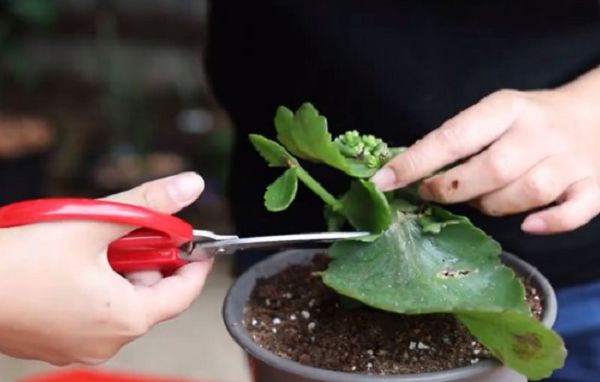
Kalanchoe leaves are broad, thick and fleshy, and also very glossy green. Although they are not as beautiful as the many vivid flowers it produces, when grown as a potted plant they will still affect its plant shape to some extent. And during normal care and management, if you come across this kind of leaf you must also cut it off in time, otherwise it can easily affect its normal growth and flowering. So, which leaves need to be cut off in time?
It is actually leaves that grow too broad and thick, because this kind of leaf not only competes for a great deal of nutrients, but also has a strong shading effect, easily affecting the photosynthesis of the leaves below it, which causes poor growth. Moreover, large leaves also affect air circulation to some extent, especially large leaves on the pot surface, which further affect water evaporation from the pot surface after watering, thus causing waterlogging in the pot and leading to root rot.
Of course, its harm is not limited to this; it can even greatly inhibit the sprouting of new buds, thereby affecting the growth of side branches. Kalanchoe flowers at the tips of its side branches, and this kind of leaf also easily inhibits the growth of flower branches and bud formation. This kind of leaf is also very likely to have a negative effect on the beauty of the potted plant's shape. So, if a Kalanchoe grows this kind of large leaf, be sure to cut it off early to avoid it affecting the plant's normal growth and flowering.
But when pruning, you also need to handle some small details properly, although generally you can just cut off the large leaves directly. However, you must get the timing of pruning right; it is best to wait until the lower part of the plant has grown new buds and small leaves, so that after cutting off the large leaves, it can still carry out photosynthesis. Of course, the newly grown buds and new leaves must be kept, and not cut off by mistake.
And before pruning, the scissors must also be disinfected and sterilized in advance, in case harmful bacteria or pathogens on them cause infection of the wound during pruning, thereby damaging the plant's growth. And while pruning the large leaves, you also need to cut off the leaves at the base of the plant that have aged, turned yellow, or rotted. Even the leaves that have fallen onto the pot surface must be cleaned up thoroughly, to avoid them rotting on the pot surface and breeding bacteria.
After pruning, do not rush to water and fertilize it, because Kalanchoe is a succulent plant, and after a wound forms it easily oozes sap. If you water and fertilize at this time, wound infection easily occurs. So, after pruning, the potted plant should be placed in a bright, well-ventilated spot with plenty of light to let its wounds heal quickly. Then we water it normally, while strengthening fertilization management to promote the growth of new buds and new leaves.
After this treatment, the Kalanchoe not only has a more beautiful and clear plant shape, but also, as if relieved of a heavy burden, the absorption pressure on the roots is further reduced. In this way, the plant's growth will become more and more vigorous, it will sprout more and more, and there will be more flower branches, so it is more conducive to flowering later. When the flowering season comes, it is bound to easily produce a spectacular display of flowers covering the whole pot.